
2D vs 3D vs 4D Massage Chairs: What Distributors & OEM Buyers Should Know
Many massage chair specification sheets use the labels 2D, 3D, and 4D. The familiar shorthand is useful, but different manufacturers may describe the hardware and program behavior behind those labels in different ways.
For a distributor or OEM buyer, the practical questions are more specific: where can the rollers move, can depth be controlled independently, how precisely can speed and pressure delivery be programmed, and what does the mechanism require from the frame, electronics, software, testing, and service plan?
At Forrest, we do not treat a higher D number as a complete product specification. We compare the mechanism together with the track, body-position sensing, program tuning, upholstery stack, noise, user fit, quality controls, and spare-part plan. The approved sample and written configuration must describe the same finished chair.
This guide explains the common market meaning of 2D, 3D, and 4D, then shows how distributors and OEM buyers can turn a marketing label into an auditable purchasing requirement. The objective is not to declare one mechanism universally best; it is to choose the right architecture for the product, price position, users, and after-sales model.
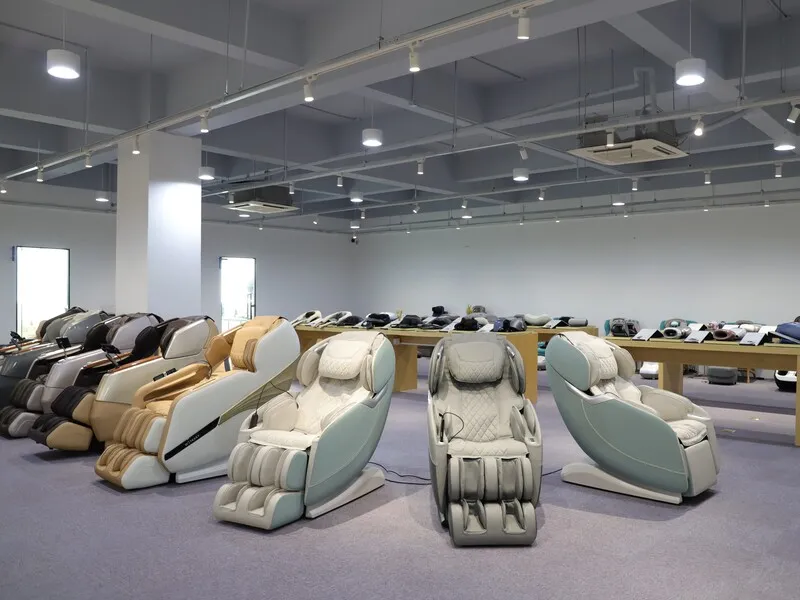
Quick Answer: 2D vs 3D vs 4D Massage Chairs
The common industry shorthand is: 2D provides vertical and lateral roller motion; 3D adds controllable fore-aft depth; 4D usually uses 3D motion with more detailed variation in speed, rhythm, timing, or pressure delivery. Because the 4D definition is not identical across suppliers, buyers should verify the actual mechanism and control behavior instead of comparing the label alone.
This table describes common market usage, not a universal technical standard. A supplier’s drawing, control matrix, firmware version, approved sample, and test record take priority over a generic definition.
| Buyer question | 2D | 3D | 4D |
|---|---|---|---|
| Can the back rollers travel vertically along the track? | Yes | Yes | Yes |
| Can the mechanism create lateral or width-related roller motion? | Normally yes | Normally yes | Normally yes |
| Is fore-aft roller depth independently driven? | Not inherent in the 2D label | The defining additional capability | Normally built on 3D depth control |
| Can speed or rhythm vary? | Basic techniques or settings may vary | Settings and programs may vary | More detailed programmed variation is the common claim |
| Typical product role | Focused entry configuration | Core to premium configuration | Premium or differentiated configuration |
| What must be approved? | Coverage, techniques, comfort and noise | Depth range, levels, program logic and comfort | Exact 4D definition, dynamic behavior, tuning and repeatability |
What Does “D” Mean in a Massage Chair?
D means dimension. In massage-chair sales language, the number summarizes how the back massage mechanism moves or how its movement is controlled. A simple explanation often uses X, Y, and Z axes, but engineering drawings do not always assign the same letter to the same direction. For an RFQ, describe the physical movement first and use the supplier’s drawing as the reference.
The mechanism is the roller carriage and drive system inside the backrest. The track guides where that carriage can travel. The control board and software tell it when and how to move. These are related systems, but they are not the same specification.
To see how the mechanism fits into the complete chair, read How Massage Chairs Are Manufactured.
| Physical direction | Common teaching label | What a buyer should verify |
|---|---|---|
| Vertical travel | Up and down, often called one horizontal drawing axis or the Y-axis | Massage start and end positions, usable coverage, shoulder positioning, zone and spot behavior. |
| Lateral movement or roller width | Left and right, often called the X-axis | Whether the roller arms move, the width is user-adjustable, and which techniques support width control. |
| Fore-aft depth | Toward and away from the user’s back, often called the Z-axis | Whether a dedicated drive controls depth, available levels, zone behavior, program behavior, and safe limits. |
| Time-based control | Speed, rhythm, cadence, dwell, or timing | Whether variation is automatic within a stroke or program, manually selected only, or simply a renamed speed setting. |

What Is a 2D Massage Chair?
How a 2D Mechanism Works
A 2D back mechanism normally travels up and down along the chair’s track while its roller arms create lateral, kneading, tapping, rolling, or related massage motion. The fore-aft position is set by the structure rather than by a separately controlled depth drive.
That does not mean every 2D chair feels identical or only has one function. Roller geometry, track contour, motor speed, massage techniques, width control, backrest angle, padding, airbags, and software can all change the experience. The 2D label only tells the buyer that independent powered depth control is not the defining capability.
Advantages for a Distributor Product Line
- A more focused mechanism architecture can support an accessible entry product position.
- Fewer controlled movement functions can simplify the user interface and service diagnosis.
- A proven 2D platform can be suitable when predictable programs, core back coverage, air compression, heating, or compact positioning matter more than adjustable depth.
- The simpler mechanism can leave budget for upholstery, foot massage, controls, packaging, or other features valued by the target channel.
Limitations to Explain Clearly
The principal limitation is the absence of independently driven roller-depth adjustment. Different users can still change settings or use padding and recline to alter perceived pressure, but that is not the same as commanding the back mechanism to project or retract by defined levels.
For a public or multi-user product, confirm that the approved pressure and body-fit range is comfortable for the intended users. Do not assume that a lower mechanism category automatically means a gentler chair; padding, geometry, and program tuning still matter.
| 2D buying check | Why it matters | Acceptance evidence |
|---|---|---|
| Track coverage | The mechanism category does not state how far the carriage travels. | Measured start/end positions and approved sample. |
| Width and techniques | Kneading, tapping, rolling, and width control differ by design. | Control matrix and function test. |
| Pressure feel | Fixed structural depth can still feel too firm or too light for the target user. | User-fit evaluation with the approved upholstery stack. |
| Noise and smoothness | A simple mechanism still depends on alignment, gears, motors, and assembly. | Defined test conditions and sample/QC record. |
| Service parts | A low unit price does not replace an after-sales plan. | Mechanism, motor, board, remote, and upholstery part codes. |
What Is a 3D Massage Chair?
What Changes From 2D to 3D?
A 3D mechanism adds powered fore-aft motion. The roller assembly can move toward the user’s back to increase projection and retract to reduce it. This additional control can be set by the user, the automatic program, or both, depending on the design.
For an OEM specification, “3D” is not enough. State whether depth is independently adjustable, how the control levels behave, which massage techniques use them, whether an automatic program changes depth by body zone, and whether manual settings remain available during a program.
Why Depth Adjustment Matters
Body shape, shoulder position, back curvature, padding compression, and personal preference change how roller pressure is perceived. Controlled depth gives the program another way to manage contact in different zones and for different users.
More projection is not automatically better. A useful 3D program controls the transition between levels, avoids abrupt contact, respects the approved mechanical range, and works with the body-position result and upholstery thickness. The buyer should evaluate comfort and repeatability rather than selecting the largest claimed number.
Product Positioning
3D is commonly used for core, mid-range, and premium chairs because depth control is easy for sales teams to demonstrate and can serve users with different pressure preferences. Final positioning still depends on the entire chair: a well-tuned 3D product can sit above a poorly integrated product carrying a higher label.
| 3D specification item | Weak wording | Buyer-ready wording |
|---|---|---|
| Depth control | 3D deep massage | Powered fore-aft roller control; state available levels and applicable modes. |
| Automatic behavior | Smart intensity | State whether depth changes automatically by zone, technique, or program step. |
| Manual control | Adjustable | Identify the user control, available levels, response time, and modes in which it operates. |
| Body-position interface | Intelligent scan | Define what is detected, what is adjusted automatically, and how the user can correct it. |
| Acceptance | Comfortable and strong | Approve a configuration sample using agreed users, programs, zones, upholstery, and settings. |
What Is a 4D Massage Chair?
The Common Market Definition
In common market usage, 4D builds on 3D fore-aft control and adds finer variation over time. The program may change roller speed, rhythm, cadence, dwell, depth, or pressure delivery during a technique or stroke to create a less repetitive sequence.
The fourth dimension is therefore usually a control concept, not another physical direction. It can involve more capable motors, sensors, control electronics, firmware, or program tuning, but the exact architecture varies by manufacturer and platform.
What the 4D Label Does Not Prove
- It does not prove a specific fore-aft travel distance or number of depth levels.
- It does not prove that speed changes automatically inside every program or every technique.
- It does not identify the track, the number of massage mechanisms, the body-position sensors, or the coverage area.
- It does not prove better mechanical tolerances, lower noise, longer life, or better upholstery.
- It does not prove that the firmware, remote, spare parts, and test method are ready for an OEM project.
How an OEM Buyer Should Verify 4D
Ask the supplier to demonstrate one named technique or automatic program at defined settings. Record whether speed and depth change automatically, whether the user can override them, and whether the same behavior repeats on another production-representative unit. The demonstration, approved firmware version, and control matrix should agree.
| 4D claim to verify | Question to ask | Useful evidence |
|---|---|---|
| Variable speed | Does speed change automatically within a stroke or program, or is it only a manual setting? | Video or sample demonstration plus program/control matrix. |
| Rhythm and timing | Which techniques and programs vary cadence, dwell, or transitions? | Program definition and approved sample. |
| Depth coordination | Can depth and speed be controlled independently and by body zone? | Mechanism specification, firmware behavior, and functional test. |
| User adjustment | Which levels can a user select, and when are they locked or overridden? | Remote or interface specification and operation test. |
| Repeatability | Does the behavior match across units with the same firmware and configuration? | First-off and final-sample comparison or agreed inspection record. |
2D vs 3D vs 4D Massage Chair Comparison
The table below is a sourcing comparison, not a promise that every product carrying the label has every capability. Use it to frame the first discussion, then replace every general description with model-specific evidence.
| Comparison point | 2D | 3D | 4D |
|---|---|---|---|
| Vertical travel | Yes | Yes | Yes |
| Lateral or width-related motion | Normally included | Normally included | Normally included |
| Independent fore-aft depth drive | Normally no | Yes | Normally yes |
| User depth control | Not inherent | Common, but levels vary | Common, but levels vary |
| Program-controlled depth | Not inherent | Possible | Commonly coordinated with timing or speed |
| Speed and rhythm | Basic program or technique control | Can include selectable speed and program variation | Commonly claims finer automatic variation |
| Mechanism and control complexity | More focused | Higher | Potentially higher; architecture varies |
| Calibration and software work | Model-specific | More depth-related checks | More combined control states to verify |
| Typical assortment role | Entry | Core, mid-range, or premium | Premium or differentiation-led |
| Likely cost direction | Lower mechanism-cost baseline | Usually higher than a comparable 2D configuration | May be higher than comparable 3D; no fixed percentage |
| Primary sample question | Is coverage and pressure suitable? | Is depth useful, smooth, and controllable? | Is the claimed dynamic behavior real, useful, and repeatable? |
Why the Mechanism Label Is Not a Finished Product Specification
Two quotations can both say “3D mechanism” while describing different motors, gear trains, sensors, fore-aft travel, levels, control logic, roller heads, mounting tolerances, noise behavior, and spare-part arrangements. The same problem is larger with 4D because the term may combine hardware and software in different ways.
A buyer needs a chain of evidence that connects the sales description to the approved product and then to production. If any link is missing, a technically correct label can still produce the wrong commercial result.
| Evidence layer | What it should define | Why it protects the project |
|---|---|---|
| Mechanism description | Physical movements, drive architecture, controls, applicable modes, and interfaces. | Prevents a broad label from replacing the technical scope. |
| Configuration or BOM record | Mechanism, motors, board, sensors, rail, upholstery, remote, and software revision. | Keeps quotation, sample, production, and spare parts on one version. |
| Control matrix | Which settings affect depth, speed, width, zone, technique, and automatic programs. | Shows what the user and software can actually control. |
| Approved sample | Massage feel, transitions, noise, fit, operation, appearance, and complete option package. | Turns subjective expectations into a shared physical reference. |
| Test and inspection record | Movement, response, abnormal noise, controls, programs, safety checks, and final configuration. | Makes production verification repeatable. |
| Spare-part list | Replaceable mechanism, motor, board, controller, cable, sensor, and upholstery parts by code. | Supports service after the first shipment. |
Does 4D Always Mean a Better Massage Chair?
No. A higher mechanism label can add control possibilities, but the finished massage chair is only better for a buyer when those possibilities are well integrated, useful to the target users, repeatable in production, and supportable after shipment.
A well-developed 3D chair can outperform a poorly tuned product marketed as 4D. It may provide smoother transitions, more suitable pressure, clearer controls, lower noise, better body fit, and a stronger service plan. The reverse can also be true when a 4D platform has genuinely useful dynamic control and the complete chair is engineered around it.
| Finished-chair factor | Question beyond the D label |
|---|---|
| Track and mounting geometry | Does the carriage follow the intended body path smoothly and maintain stable engagement? |
| Body-position sensing | What does the chair detect, how does it use the result, and can the user correct it? |
| Program tuning | Are changes in technique, depth, speed, air pressure, and recline coordinated and comfortable? |
| Motors and transmission | Are movement, torque, response, backlash, heat, and noise suitable for the duty cycle? |
| Mechanical tolerance | Do alignment and play remain consistent between the approved sample and production units? |
| Roller head and arm design | Is contact shape appropriate across the intended back and shoulder zones? |
| Software and controls | Can users understand the settings, and does each command create the documented response? |
| Upholstery and padding | Does the approved material stack preserve the intended pressure and movement? |
| Testing and service | Can the supplier verify behavior and provide the correct replacement parts and instructions? |
Mechanism Type, Track, Body Scan and Other Systems Are Separate Decisions
Product listings often place 3D, SL track, body scan, zero gravity, airbags, heating, and dual mechanism in one feature list. They can work together, but none of them automatically proves the others. Separating the layers makes quotations and comparison sheets more accurate.
Track and mechanism choices also affect the upright and reclined footprint. Use the Massage Chair Dimensions, Weight, Doorway Clearance & Container Loading Guide when planning a product range or installation.
| System layer | What it controls | What it does not prove |
|---|---|---|
| 2D/3D/4D back mechanism | Roller-carriage movement and, for 4D claims, time-based control behavior. | Track length, scan accuracy, airbag coverage, recline, heating, or number of mechanisms. |
| S, L, SL, flex, or other track | The path and coverage along which a mechanism can travel. | Independent roller depth, program quality, or mechanism count. |
| Body-position or shoulder detection | An estimated user position used to align a program. | A 3D mechanism or a complete body-shape map unless specifically demonstrated. |
| Automatic massage programs | The sequence and coordination of techniques, zones, depth, speed, airbags, heat, and chair motion. | The physical capability of hardware that is not installed. |
| Air compression | Inflation and release of air cells in defined body zones. | Roller dimension or mechanical back-massage depth. |
| Dual mechanism | Two massage mechanisms or carriages in a defined architecture. | That either one is automatically 3D or 4D; each mechanism must be specified. |
| Zero-gravity or recline | Chair angle and body position. | Roller dimension, track type, or massage intensity. |
How Mechanism Type Affects Product Cost
Moving from one mechanism architecture to another can change more than the price of the roller carriage. The effect depends on the existing platform, selected parts, software, validation scope, order quantity, and whether the change stays inside a proven configuration.
There is no responsible fixed percentage that applies to every 2D-to-3D or 3D-to-4D change. Buyers should request a like-for-like quotation in which the mechanism-related changes are identified and all other major specifications remain controlled.
Mechanism cost is only one part of the complete sourcing decision. The Massage Chair Wholesale Price, MOQ & Shipping Cost Guide explains how to compare the total commercial scope rather than the unit price alone.
| Potential cost driver | Why it may change | Quote question |
|---|---|---|
| Mechanism assembly | Additional drives, gears, linkages, roller arms, or structural parts may be required. | Is the quoted mechanism a standard production part for this platform? |
| Motors and transmission | Depth and dynamic control may need different motors, gear ratios, encoders, or feedback. | Which motor and transmission revisions are included? |
| Sensors | Position, load, current, or body-position inputs may support additional control states. | Which sensors are part of the approved configuration? |
| Control board and wiring | More controlled outputs, feedback inputs, power capacity, and harness connections may be needed. | Does the existing board support the mechanism without a hardware revision? |
| Frame, rail, and shell interfaces | Mounting geometry, clearance, load, and movement envelope can change. | Are structural changes or new tooling required? |
| Software and interface | New levels, program logic, screens, prompts, and firmware validation may be needed. | What software work and version control are included? |
| Calibration and assembly | Additional settings or mechanical alignment points can add production work. | What in-process controls and fixtures are used? |
| Testing | More movement combinations create a larger function and reliability test matrix. | Which tests are standard, and which are project-specific? |
| Service inventory | Additional part versions may need stocking, documentation, and technician training. | Which spares are included or available after shipment? |
How Mechanism Type Affects Reliability and Maintenance
For production and pre-shipment controls, use the Massage Chair Quality Control Checklist as a starting point and add the model-specific mechanism criteria agreed for the project.
More Complex Does Not Automatically Mean Unreliable
A mechanism with more components and control states can be reliable when the design margins, parts, assembly, calibration, software, and testing are appropriate. A simpler mechanism can still fail if gears, motors, alignment, wiring, or process control are poor.
The practical difference is that a more complex system normally creates more possible failure modes and more diagnostic branches. The service plan should grow with the technical complexity of the product.
Plan Service Before the Purchase Order
A distributor should know whether a failed mechanism is replaced as a complete assembly or repaired by module, which tools and instructions are needed, how firmware or controller compatibility is controlled, and what information local service teams must collect before parts are shipped.
| Service item | Minimum project question | Record to retain |
|---|---|---|
| Mechanism and motor versions | Can a future spare replace the shipped version directly? | Part code, revision, compatible serial or production range. |
| Controller and firmware | Which board, remote, and software versions work together? | Configuration matrix and update/replacement instructions. |
| Diagnosis | How can local service separate mechanism, motor, sensor, board, and wiring faults? | Error information, troubleshooting flow, photos, videos, and test points. |
| Replacement procedure | Can the part be replaced safely in the destination market? | Service manual, tools, labor assumptions, and safety steps. |
| Spare inventory | Which parts should ship with the order or remain available? | Agreed spare list, quantities, prices, warranty terms, and availability route. |
| Failure feedback | How will field data be reported and linked to production? | Serial number, failure mode, operating context, replaced part, and corrective action. |
Which Mechanism Should Distributors Choose?
Build the assortment around customer needs, channel expectations, selling price position, demo ability, warranty capacity, and service economics. A useful range gives each model a clear reason to exist; it does not simply add another D number.
Entry Line: Consider a Proven 2D Platform
A 2D configuration can suit a price-conscious or easy-operation product when the approved chair still delivers appropriate coverage, fit, comfort, controls, and quality. It is also useful when the channel values a focused feature set and straightforward service.
Core or Mid-Range Line: Consider 3D Depth Control
A clear 3D step-up gives sales teams an understandable demonstration: users can compare different roller-depth settings. It can support a broader user preference range, but the model still needs good tuning and a defined service package.
Premium Line: Compare Advanced 3D and Verified 4D Behavior
For a premium position, compare the complete approved experience. A refined 3D chair may be the stronger choice if it has better fit, programs, materials, noise, and support. A 4D configuration is justified when its dynamic control is demonstrable, valued by the target channel, and supported by the required QC and parts plan.
| Assortment role | Mechanism direction | Commercial proof to collect |
|---|---|---|
| Entry or opening price | Usually a proven 2D configuration | Clear feature boundary, stable sample, appropriate user fit, acceptable noise, service parts, and landed cost. |
| Core volume model | Often 3D | Depth-control demonstration, user preference coverage, showroom script, return reasons, and parts plan. |
| Premium step-up | Advanced 3D or verified 4D | Meaningful experience difference, complete specification, premium materials/controls, validation, and warranty economics. |
| Commercial or multi-user project | Select by duty and serviceability, not label | Usage profile, cleaning, user range, operating limits, inspection plan, and local support. |
| OEM brand-exclusive model | Platform-specific | Differentiation brief, feasibility, tooling/software scope, approved sample, compliance, and change control. |
How to Validate a Mechanism During OEM Sampling
Sampling sits inside a larger development path. Review the Massage Chair OEM Manufacturing Process for requirements, quotation, tooling, compliance, production, and change-control steps.
Before the Sample Is Built
Freeze the mechanism description, track, main motors and electronics, upholstery stack, software version, programs, controls, voltage configuration, and options that can affect massage behavior. Define the intended users and the exact settings to be reviewed.
During Sample Evaluation
Run the same named programs from the same starting condition. Check the shoulder or body-position step, massage path, depth transitions, width, techniques, abnormal noise, control response, recline interaction, upholstery effect, and stop or reset behavior. Test more than one user within the intended range.
At Sample Approval
Record the sample identity, configuration revision, firmware, settings, open deviations, photos or video, and approved acceptance criteria. If a later component or software change can alter massage behavior, it must go through change review rather than silently replacing the reference.
| Sample check | Method | Pass basis | Record |
|---|---|---|---|
| Movement directions | Operate manual zone/spot and applicable techniques while observing carriage and roller response. | All claimed directions and controls operate smoothly in the specified modes. | Video, control matrix, sample ID, tester. |
| Depth levels | Run each user-selectable level at agreed zones and program states. | Distinct, stable response without abrupt transition, interference, or abnormal sound. | Settings, zones, observations, firmware. |
| 4D behavior, if claimed | Demonstrate automatic speed/rhythm/timing changes in a named program or technique. | Observed behavior matches the written definition and repeats after restart. | Program name, timestamps, video, revision. |
| Body-position result | Run detection with intended user profiles and apply manual correction where provided. | Starting point and massage path are appropriate and adjustable as specified. | User profile, result, correction, comments. |
| Noise and smoothness | Operate the same sequence in a defined room and chair condition. | No abnormal knock, scrape, vibration, hesitation, or inconsistent transition. | Condition, program, unit ID, finding. |
| Thermal and repeated operation | Run the agreed duty sequence with the complete configured chair. | No unsafe condition, protection event, function loss, or unacceptable behavior under the agreed plan. | Cycle plan, duration, results, corrective action. |
| Unit-to-unit comparison | Compare the approved sample with first-off or production-representative units. | Critical behavior remains within agreed acceptance criteria. | Reference sample, production IDs, deviations, disposition. |
How to Write a Buyer-Ready Mechanism Specification
Mechanism requirement = physical movement + user controls + automatic program behavior + hardware/software revision + sample acceptance + production test + spare-part plan.
Replace adjectives such as advanced, intelligent, deep, lifelike, or premium with observable requirements. The wording does not have to expose confidential mechanism design, but it must let both parties identify the same product and decide whether it passes.
| Specification block | Information to include |
|---|---|
| Mechanism category | 2D, 3D, or buyer-defined 4D behavior plus supplier mechanism name or part reference. |
| Physical movement | Vertical path, lateral/width behavior, fore-aft depth capability, and any zone restrictions. |
| User settings | Depth, speed, width, position, technique, and intensity levels with applicable modes. |
| Automatic programs | Which programs change depth, speed, rhythm, zone, recline, or air compression and how the user can intervene. |
| Sensing | What is detected, how the result changes mechanism position, and available manual correction. |
| Complete chair interfaces | Track, frame, upholstery, controls, voltage, board, software, footrest, airbags, and options that affect behavior. |
| Acceptance method | Approved sample, named programs, user range, settings, observations, objective checks, and allowed deviations. |
| Production controls | Incoming part identity, assembly/calibration checkpoints, functional test, aging or repeated-operation plan, and final inspection. |
| Change control | Parts or software changes requiring notice, review, re-sampling, re-testing, or compliance assessment. |
| After-sales | Spare codes, compatibility, warranty route, diagnosis information, replacement instructions, and expected availability. |
What OEM Buyers Should Ask a Massage Chair Manufacturer
- What is the exact mechanism name, part reference, and configuration revision?
- Who manufactures the mechanism, and how is the approved source controlled?
- Which physical directions are powered, and which settings are user-adjustable?
- Is fore-aft depth independently controlled? Which modes and zones support it?
- If the product is called 4D, what changes automatically: speed, rhythm, timing, dwell, depth, pressure delivery, or another variable?
- How many documented control levels are available, and are they distinct in the approved sample?
- What does the body-position or shoulder-detection system measure, and how does it affect the mechanism?
- Which track and mounting architecture are used?
- Can massage programs or interface labels be customized, and what firmware validation is required?
- What movement, noise, repeated-operation, electrical, and final inspection tests are performed?
- How is the production unit compared with the approved sample?
- Are replacement mechanisms, motors, sensors, boards, controllers, and service documents available?
- Which configuration changes require a new sample, test, compliance review, price, MOQ, or lead-time update?
| Supplier answer | Buyer interpretation |
|---|---|
| A clear drawing, control explanation, part reference, and sample demonstration | The label is connected to a defined configuration; proceed to validation. |
| Only a feature list or a higher D number | The mechanism is not yet specified; request evidence before comparing price. |
| Manual speed settings presented as automatic 4D variation | Clarify the 4D definition and rewrite the claim to match actual behavior. |
| Depth or program behavior changes between sample and production | Stop acceptance, identify revision changes, and use change-control and corrective-action records. |
| No spare-part reference or compatibility information | After-sales risk is unresolved even if the sample performs well. |
How Forrest Discusses 2D, 3D and 4D Configurations
Forrest’s current published range uses model-specific terms including 2D mechanism, Air 3D, gear 3D, and dual gear 3D mechanism. These descriptions are not interchangeable. During an inquiry, we connect the selected model to its actual track, programs, controls, option package, product dimensions, electrical configuration, packaging, and quality requirements.
Forrest does not use an unverified 4D label as a substitute for a specification. If your project requires 4D behavior, tell us exactly which depth, speed, rhythm, timing, program, control, and service functions you expect. Our team can then review platform availability, customization scope, sample work, testing, commercial conditions, and project risks.
Explore the current Forrest Massage Chair range to identify a starting platform, then send the model, destination market, quantity, channel, target product position, and required mechanism behavior for review.
| Published Forrest description | Current examples | How to use it in a sourcing discussion |
|---|---|---|
| 2D | FR-300 / FR-310 | Use as the starting mechanism category, then confirm track, programs, width, pressure feel, options, and service parts. |
| Air 3D | FR-330 / FR-500 | Treat Air 3D as the published model configuration name; confirm the exact mechanism and function matrix for the selected project. |
| gear 3D | FR-700 / FR-700 Plus | Confirm the gear 3D mechanism, depth/control behavior, rail, programs, interface, options, and approved sample. |
| dual gear 3D mechanism | FR-700D | Specify both the dual-mechanism architecture and the behavior, coverage, control, service, and testing of the configured chair. |
| 4D or another requested configuration | Project-specific feasibility review | Define required behavior first; do not assume a platform, public model, cost, MOQ, or lead time until reviewed. |
FAQ
Is 4D Better Than 3D?
Not automatically. A verified 4D configuration may provide more refined speed, rhythm, timing, and depth coordination, but the finished-chair result also depends on the track, sensing, tuning, motors, tolerances, roller design, software, upholstery, noise, testing, and service. Compare approved samples and evidence, not the label alone.
What Is the Difference Between 2D and 3D Massage Chairs?
The usual distinction is powered fore-aft roller movement. A 2D mechanism provides vertical and lateral massage motion without independent depth drive; a 3D mechanism adds controllable movement toward and away from the user’s back. Exact levels, travel, program behavior, and user controls remain model-specific.
Does a 4D Massage Chair Use a Different Track?
Not necessarily. 4D describes claimed mechanism and program-control behavior, while S, L, SL, flex, and other track terms describe the carriage path. A chair can combine different mechanism and track architectures, so specify both.
Can a 3D Massage Chair Be Customized for an OEM Project?
Yes, 3D platforms can be discussed for OEM or private-label projects, but the feasible changes depend on the selected model. Branding, upholstery, programs, controls, packaging, electrical configuration, functions, and mechanism-related changes can have different MOQ, sample, tooling, test, compliance, cost, and lead-time effects.
Do All Manufacturers Use the Same Definition of 4D?
No. Variable speed and rhythm on top of 3D depth is a common definition, but suppliers may package or describe the controls differently. Ask whether variation is automatic or manual, which variables change, which programs use it, and how the claim is demonstrated and tested.
Is 4D a Fourth Physical Direction of Roller Travel?
Usually not. The common interpretation treats time-based variation—such as speed, rhythm, cadence, or dwell—as the fourth dimension. Because terminology varies, the supplier’s technical definition and approved sample should control the project wording.
Choose the Mechanism by Evidence, Market Fit and Support
2D, 3D, and 4D are useful category labels, but they are not complete product specifications. For a distributor, the correct choice is the mechanism that creates a clear product role, a demonstrable user benefit, stable production, workable landed cost, and an after-sales plan the business can support.
For an OEM buyer, the safest comparison is specific: define physical motion, controls, program behavior, sensing, track, interfaces, approved sample, production tests, change control, and spare parts. That method explains why two chairs with the same label can have different prices and different commercial results.
Planning a 2D, 3D, or buyer-defined 4D product? Discuss your massage chair OEM configuration with Forrest. Share your target market, channel, model direction, quantity, required mechanism behavior, options, and launch plan so we can review a suitable starting point.