
What Certifications Are Required for Massage Chairs?
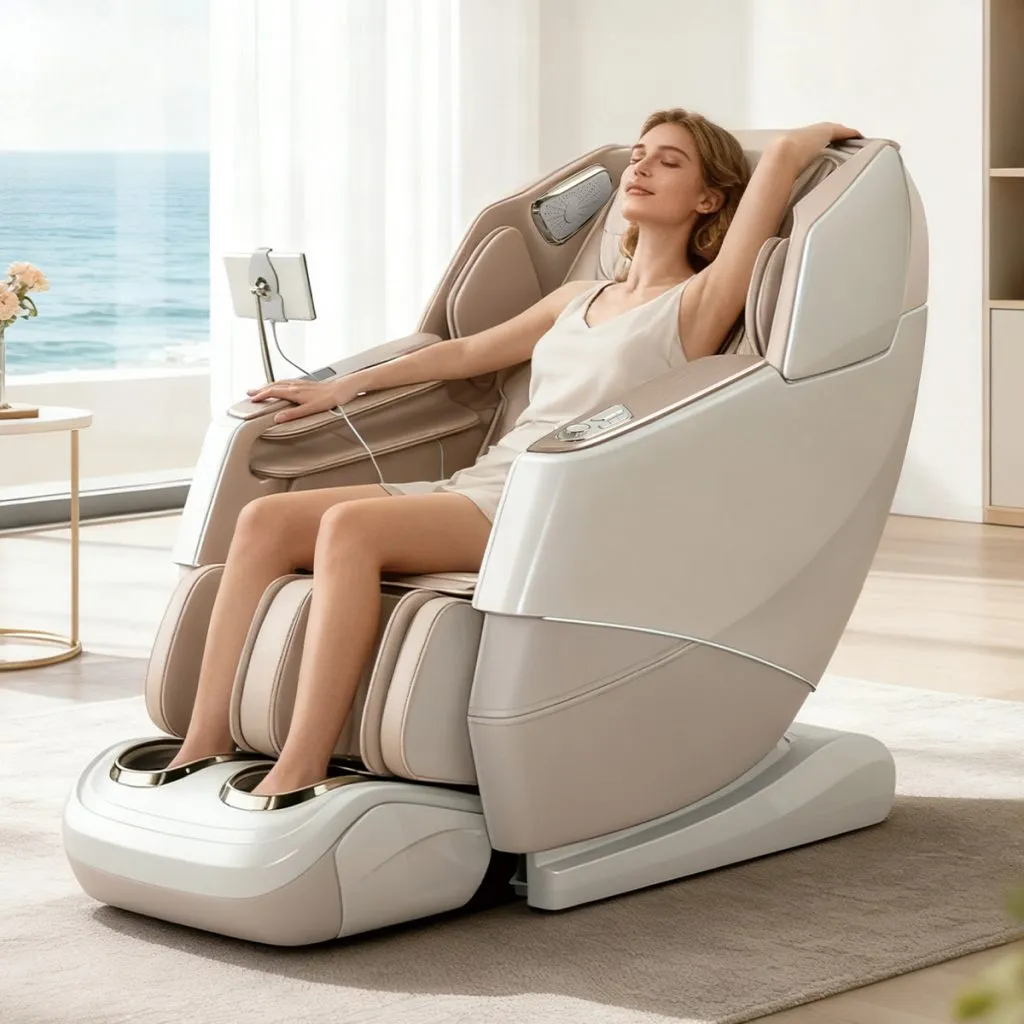
For distributors, importers, and private label brands, certification is one of the most important factors when sourcing massage chairs. A massage chair is not only a furniture-style wellness product. It usually includes motors, control boards, wiring, adapters or power systems, airbags, heating, electronic controllers, and sometimes Bluetooth or other wireless modules.
Different countries and sales channels may require different compliance standards. Understanding these requirements can help buyers avoid import delays, customs issues, marketplace restrictions, retailer rejection, and unnecessary re-testing costs.
This guide explains the most common certifications required for massage chairs and how they apply to different markets. Exact requirements should always be confirmed by product model, target country, electrical specification, sales channel, and current local regulations.
Why Are Certifications Important for Massage Chairs?
Certifications help buyers confirm whether a product is suitable for a specific market, sales channel, and import plan. They also help reduce risk before mass production, especially for large products such as massage chairs where rework, return shipping, and local after-sales handling can be costly.
For massage chair buyers, certifications are important for several reasons:
- Product safety: Massage chairs include electrical, mechanical, heating, and control systems that must operate safely during daily use.
- Electrical compliance: Target markets may require testing for electrical safety, electromagnetic compatibility, radiofrequency performance, or hazardous substance control.
- Customs clearance: Missing or incorrect documentation can create import delays or additional inspection costs.
- Marketplace requirements: Online marketplaces may ask for compliance documents before allowing a product listing.
- Retailer requirements: Retail chains and distributors may require specific certificates before accepting a product into their supply program.
- Consumer confidence: Clear compliance documentation helps support trust in the product and the brand behind it.
Without the proper certifications, massage chairs may face customs delays, marketplace restrictions, or limitations when entering certain regions.
Common Certifications for Massage Chairs
The table below summarizes common certifications and compliance marks that buyers may encounter when sourcing massage chairs. The actual requirement depends on the destination market, product model, voltage, wireless functions, adapter or battery configuration, and sales channel.
| Certification | Region | Purpose |
|---|---|---|
| CE | European Union / EEA | Safety and compliance for applicable EU product rules |
| RoHS | European Union / EEA | Hazardous substance control in electrical and electronic equipment |
| FCC | United States | Electromagnetic compatibility and radiofrequency compliance |
| ETL | North America | Electrical safety certification through a recognized testing body |
| UL | North America | Electrical safety certification through UL standards and listing programs |
| CB | International | International product safety test report and certificate system |
| PSE | Japan | Electrical appliance safety requirements for Japan |
| KC | South Korea | Electrical appliance and product compliance for Korea |
| SASO / SABER | Saudi Arabia | Market access and certificate of conformity process |
| GCC / G-Mark | GCC markets | Low voltage electrical equipment conformity for applicable products |
CE Certification for Massage Chairs
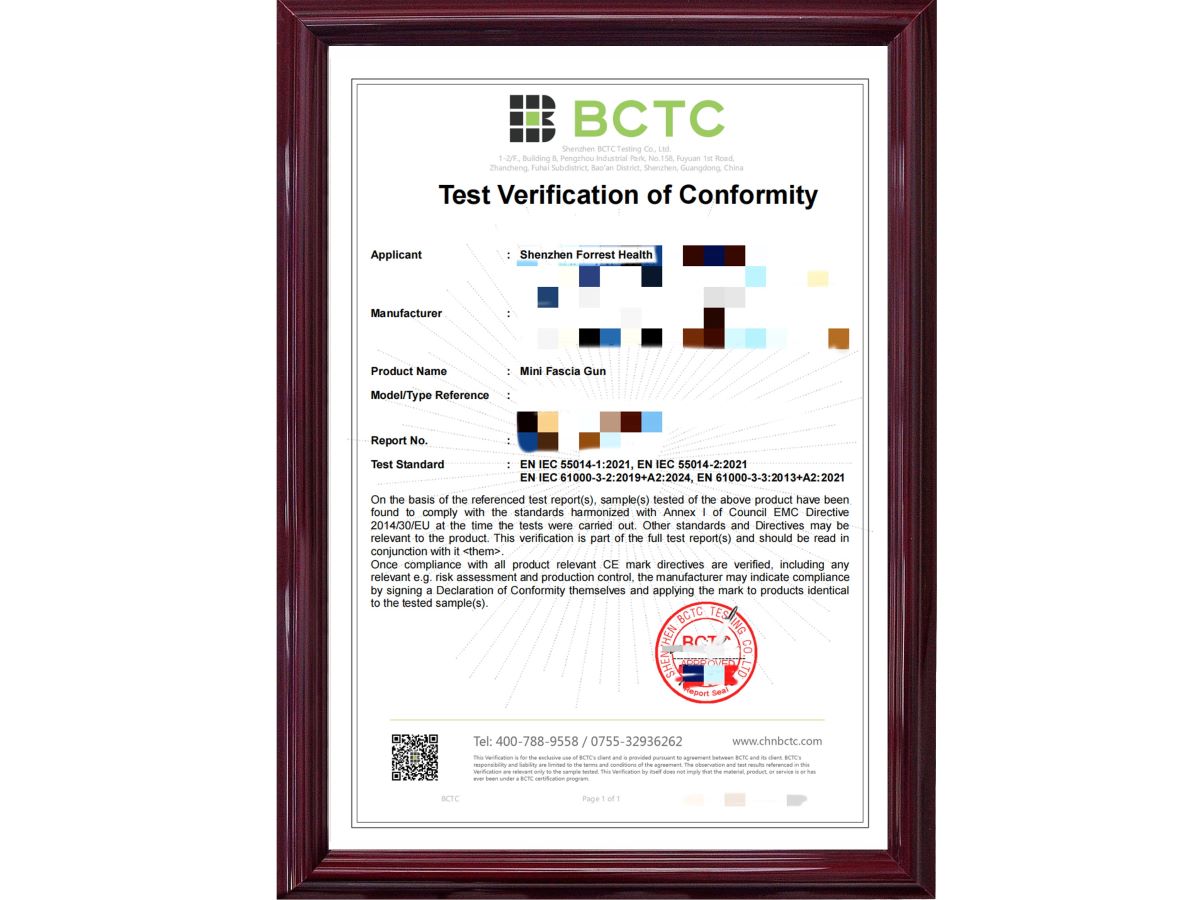
CE marking is used for products placed on the European Economic Area market when the product falls under applicable EU legislation. For massage chairs, CE compliance may involve safety, electromagnetic compatibility, hazardous substance, and radio equipment considerations depending on the design.
For many electric massage chairs, buyers should discuss whether the following areas are relevant:
- Electrical safety requirements for the product or power system
- Electromagnetic compatibility requirements for electronic controls and motors
- RoHS restrictions for electrical and electronic components
- Radio equipment requirements if the massage chair includes Bluetooth or wireless functions
- Technical file, declaration of conformity, labeling, and user documentation
CE is important for European importers because it supports legal market entry, distributor review, and retailer compliance checks. Buyers should not treat CE as a simple logo. They should review the declaration of conformity, test reports, applicable directives, product labeling, and exact model coverage.
Related keyword focus: CE certification massage chair, massage chair CE compliance.
RoHS Compliance
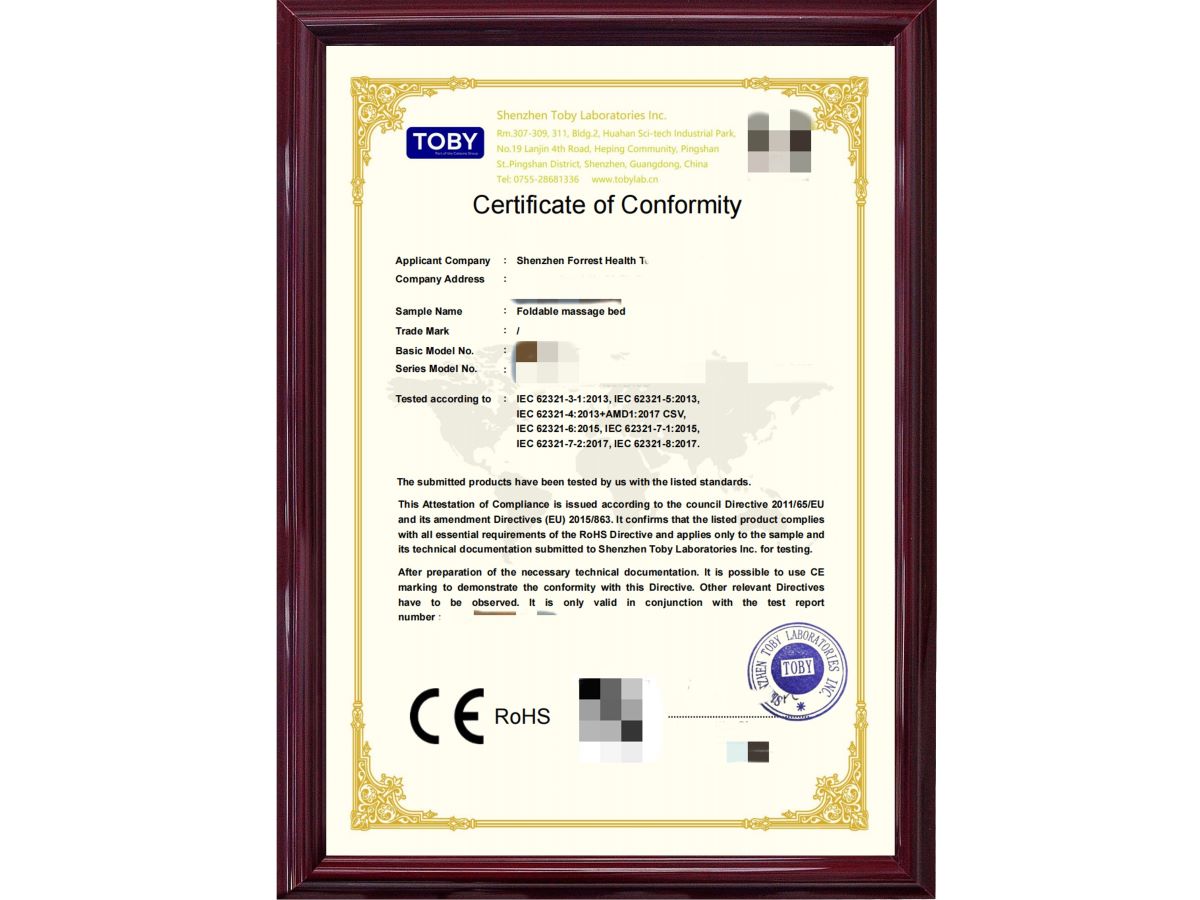
RoHS stands for Restriction of Hazardous Substances. It applies to electrical and electronic equipment in the EU and restricts the use of certain hazardous substances in components and materials.
For massage chairs, RoHS may be relevant because the product can include electronic control boards, wiring, motors, adapters, display panels, heating systems, sensors, and other electrical parts. Buyers selling into Europe should confirm whether the selected model has RoHS documentation that matches the product structure and component list.
RoHS is not only a document request. It should be connected with material control, supplier management, component selection, and product consistency from one production batch to the next.
Related keyword focus: RoHS massage chair, massage chair RoHS certification.
FCC Certification for Massage Chairs
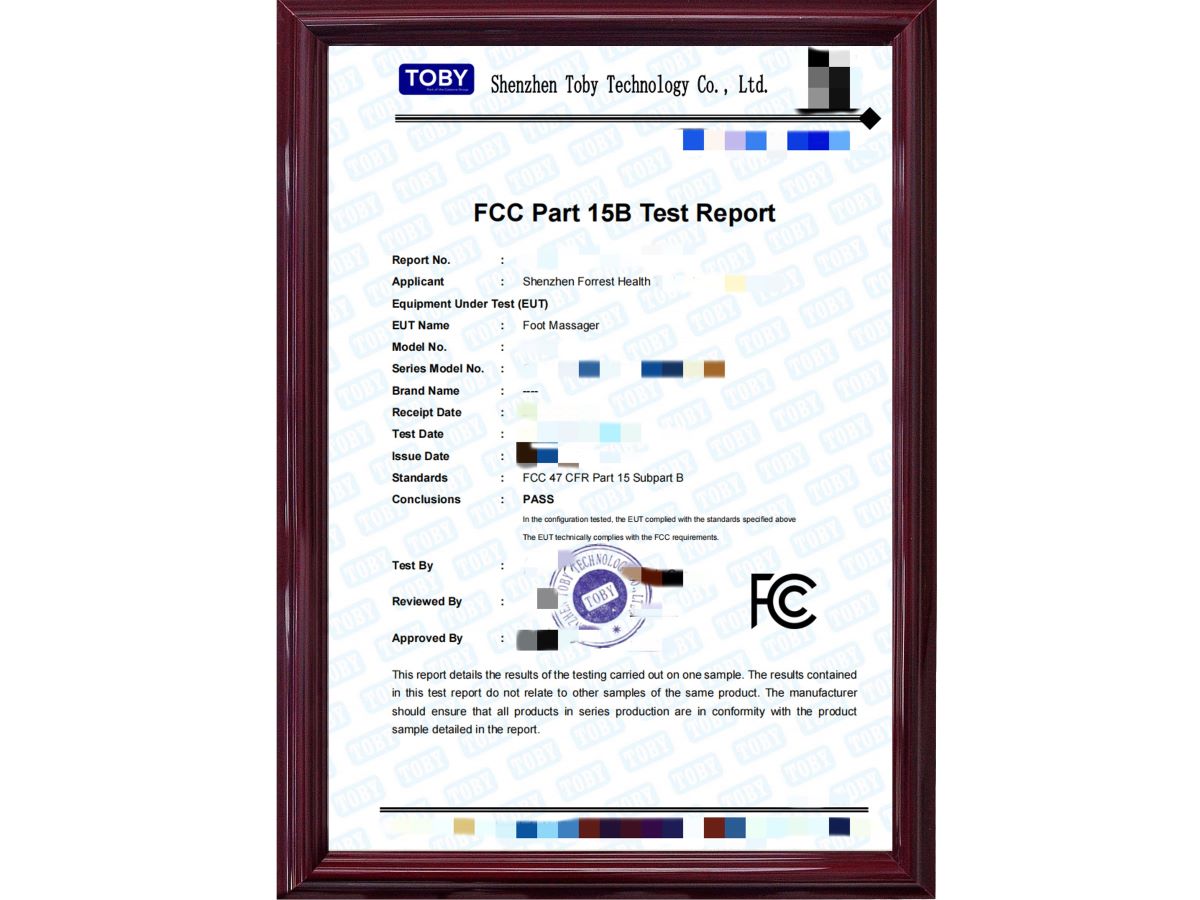
FCC compliance is important for products marketed or imported into the United States when they contain electronic systems that can emit radiofrequency energy. Massage chairs may need FCC-related review because they often include controllers, display systems, power electronics, motors, Bluetooth modules, speakers, or other electronic functions.
FCC requirements may apply to:
- Controllers and control panels
- Bluetooth modules or wireless audio functions
- Electronic systems that may generate electromagnetic interference
- Power adapters or electrical components, depending on the product configuration
For U.S. projects, buyers should confirm whether the massage chair requires FCC Certification or Supplier’s Declaration of Conformity based on the product’s electronic and wireless structure. If a wireless module is used, buyers should also confirm module approval, labeling, user manual statements, and whether changes to the module or antenna affect compliance.
Related keyword focus: FCC certification massage chair.
ETL and UL Safety Certifications
ETL and UL are commonly discussed for North American electrical safety. Both are associated with product safety testing and certification through recognized testing organizations. The key point for buyers is not only the mark name, but whether the product has been tested to the appropriate safety standard by a recognized body within the relevant scope.
UL is widely recognized as a product safety certification mark and standards organization. ETL is a certification mark used by Intertek. In practical B2B sourcing, many distributors and retailers prefer ETL-certified massage chairs because ETL testing demonstrates compliance with recognized North American safety standards when the certification is valid and model-specific.
For buyers, the difference is usually practical:
- UL: Often requested by retailers, distributors, project customers, or internal compliance teams familiar with UL listing.
- ETL: Often accepted as an alternative safety certification when issued by a recognized testing body for the correct product standard.
- cETL or CSA: Often relevant when selling into Canada, depending on the product and channel requirements.
For North America, buyers should confirm the exact listing, model number, standard, certification body, and whether the certification applies to the finished massage chair or only to a component such as an adapter.
CB Certification for International Markets
CB certification is part of the IECEE CB Scheme, an international system used to support product safety testing and certification for electrical and electronic equipment. A CB test report can help buyers and manufacturers reduce repeated testing when applying for certifications in multiple markets.
CB is useful when a buyer plans to sell massage chairs across more than one region. It does not automatically replace every national certification, but it can support a faster certification process by providing internationally recognized test results for review by national certification bodies.
For massage chair projects, buyers can ask whether CB reports are available for the model, power system, adapter, motorized components, or related electrical configuration. If the product will be modified for OEM or private label use, buyers should confirm whether the CB documentation still applies after the change.
Country-Specific Requirements
Different markets may require different certification combinations. The table below gives a buyer-oriented starting point, but it should not replace local compliance review.
| Market | Common Requirements to Review | Buyer Notes |
|---|---|---|
| Europe | CE, RoHS | Also review EMC, electrical safety, documentation, labeling, and RED if wireless functions are included. |
| United States | FCC, ETL or UL depending on channel | Retailers, marketplaces, and distributors may have requirements beyond import rules. |
| Canada | cETL, CSA, IC/ISED where applicable | Confirm electrical safety and wireless requirements based on model and sales channel. |
| Japan | PSE | Confirm whether the product, adapter, or power system falls under Japan’s electrical appliance safety scope. |
| South Korea | KC | Confirm safety certification, safety confirmation, or supplier declaration category for the product. |
| Middle East | SASO, SABER, GCC / G-Mark | Requirements vary by country and product type; low voltage electrical equipment may require G-Mark review. |
How to Verify Massage Chair Certifications
This is one of the most important steps in massage chair sourcing. A certificate is useful only when it matches the actual product you plan to import and sell.
Before confirming an order, buyers should verify:
- Certificate validity: Check whether the certificate is current and still accepted for the target market.
- Model coverage: Confirm the exact massage chair model number, series, voltage, and configuration listed on the certificate.
- Test reports: Ask for related test reports, not only a certificate image.
- Issuing organization: Confirm whether the testing laboratory or certification body is recognized for the relevant standard.
- Expiration dates: Review certificate validity periods, renewal requirements, and whether product changes require re-testing.
Use this checklist when reviewing supplier documents:
- Request certificate copies.
- Verify testing reports.
- Confirm model numbers.
- Check validity dates.
- Review market requirements.
- Confirm whether the certificate covers the finished massage chair or only a component.
- Ask whether OEM, private label, color, packaging, adapter, or wireless module changes affect certification.
Common Certification Mistakes Buyers Should Avoid
Mistake 1: Assuming one certificate covers all markets.
CE, FCC, ETL, UL, PSE, KC, SASO, and GCC requirements serve different markets and purposes. A certificate used for Europe may not satisfy a U.S. retailer, and a North American safety mark may not replace Japanese or Korean requirements.
Mistake 2: Not verifying model-specific certificates.
A certificate should match the exact product model, voltage, electrical configuration, and version you plan to purchase. Buyers should be careful when a supplier provides a certificate for a similar model or only for a component.
Mistake 3: Ignoring retailer compliance requirements.
Retail chains, marketplaces, and distributors may require additional documents beyond customs clearance. Buyers should ask their channel partners about documentation before mass production.
Mistake 4: Focusing only on price.
A lower unit price can become expensive if the product lacks the correct certification documents, needs re-testing, or cannot be listed in the intended channel. Certification planning should be included in the total sourcing cost.
How Forrest Supports Compliance Requirements
Forrest supports distributors, importers, and private label partners by providing certification documentation, product specifications, and compliance support for different market requirements. Available documents depend on the selected product model, target market, order plan, and current certificate scope.
Forrest’s Certifications page lists quality system and product compliance references including ISO9001, ISO13485, BSCI, CE, FCC, ETL, RoHS, and ISO 14001 / EMS. Buyers should confirm exact model coverage before sampling or bulk order planning.
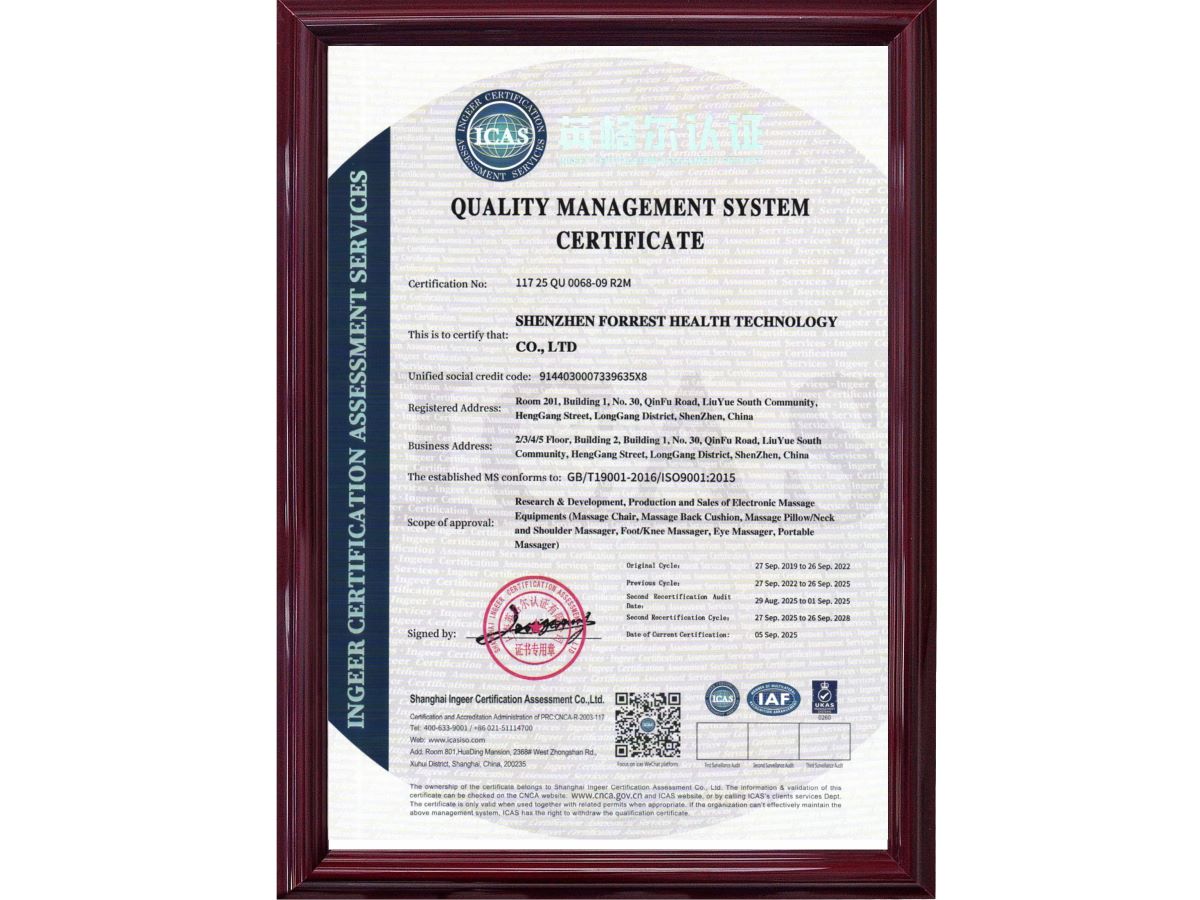
For certification-related sourcing questions, buyers can share their target market, product model, sales channel, required certificates, estimated quantity, adapter or voltage requirements, and expected launch timeline. This helps Forrest review available documents and recommend the next steps more efficiently.
Related Resources
FAQ
Do all massage chairs require CE certification?
No. CE marking is for products placed on the European Economic Area market when the product falls under applicable EU product rules. A massage chair sold into Europe will usually need CE-related compliance review, but requirements should be confirmed by model, electrical structure, and target country.
Is ETL certification required in the United States?
ETL is not the only possible electrical safety mark in the United States, but many retailers, distributors, project customers, and compliance teams request ETL or UL-type safety certification for electrical products. Buyers should confirm channel requirements before ordering.
What is the difference between ETL and UL?
UL and ETL are both associated with product safety certification. UL is a well-known safety certification organization and mark. ETL is a certification mark used by Intertek. For buyers, the important point is whether the finished product has been tested to the correct standard by a recognized body and whether the listing matches the exact product model.
Is RoHS mandatory for Europe?
RoHS applies to electrical and electronic equipment sold in the EU unless the product is specifically excluded. Since massage chairs usually contain electrical and electronic components, buyers selling into Europe should review RoHS compliance carefully.
Can one certification be used for all countries?
No. One certificate usually cannot cover all countries. Different markets may require different documents, and retailer or marketplace requirements may be stricter than basic import requirements. Buyers should confirm the certification plan for each target market before mass production.
Conclusion
Different markets require different massage chair certifications. Buyers should not treat certification as a final paperwork step after production. It should be reviewed early, before sampling, packaging design, marketplace listing, and bulk order confirmation.
When choosing a massage chair supplier, confirm your target market, required certifications, product model, sales channel, voltage, wireless functions, and packaging requirements. Then make sure the supplier can provide the relevant certificates and test reports to support smoother import, listing, and sales.
If you are sourcing massage chairs for distribution, retail, ecommerce, or private label projects, Contact Forrest with your target market and certification requirements. The team can help review available documents and recommend suitable models for your project.