
Massage Chair OEM Project Guide: MOQ, Customization, Tooling & Lead Time
If you plan to launch a massage chair under your own brand, an OEM project is usually more than choosing an existing chair and adding a logo. Product specifications, appearance, functions, packaging, compliance evidence, sample approval, production controls, and shipment requirements all have to describe the same finished product.
At Forrest, we treat the approved specification and approved sample as the project baseline. That gives the buyer, engineering team, purchasing team, production team, and quality team one version to work from. Without that baseline, a small request can turn into an unpriced component change, a missed test, or a late production revision.
This guide explains the complete project path from idea to specification, quotation, sample, tooling, testing, production, and shipment. It also shows why there is no honest universal MOQ or lead time for every massage chair OEM order—and what a buyer should request instead.
Scope of this guide: This article focuses on the OEM project path—requirements, feasibility, customization, tooling, samples, compliance, production release and lead time. For the factory assembly and production sequence itself, see How Massage Chairs Are Manufactured.
Quick Answer: How a Massage Chair OEM Project Works
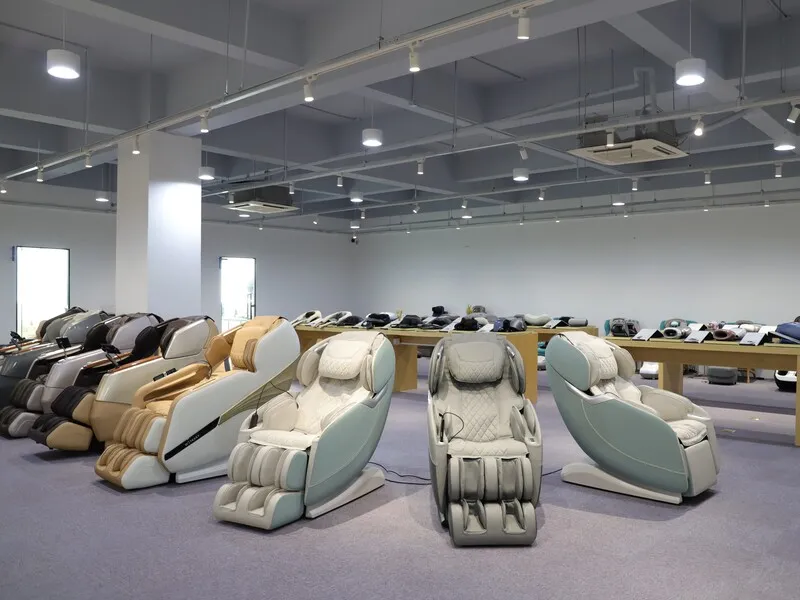
- Define the market, sales channel, product position, users, functions, size, electrical configuration, packaging, compliance needs, quantity, and target launch window.
- Choose whether to customize an existing production platform or develop a substantially new product. This decision changes cost, MOQ, tooling, testing, and time.
- Freeze a written configuration before sampling. Every part of the quotation should refer to that configuration or revision.
- Approve function, appearance, labels, manuals, and packaging through documented samples before mass production.
- Review changes against product safety, certification scope, tooling, component MOQ, unit cost, and lead time before accepting them.
- Release mass production only when open items, responsibilities, inspection criteria, packaging files, and shipment conditions are clear.
The OEM Project Map: Idea to Shipment
The stages can overlap, but each one needs a decision and an output. A calendar date alone is not a project plan.
| Stage | Main decision | Evidence or output before moving on |
|---|---|---|
| 1. Requirements | What product, market, channel, user, price position, and launch goal are we designing for? | Buyer brief, target-market list, quantity plan, must-have and optional requirements. |
| 2. Feasibility | Can an existing platform support the request safely and commercially? | Feasibility response, baseline model, allowed changes, constraints, open questions. |
| 3. Quotation | What is included, excluded, recurring, and one-time? | Revision-controlled quotation covering unit price, MOQ, sample, tooling, testing, packaging, and delivery assumptions. |
| 4. Engineering and tooling | Which designs, software, parts, molds, fixtures, or documents must change? | Approved drawings, bills of material or configuration records, artwork, tooling plan, and responsibility list. |
| 5. Samples | Does the product perform and look like the agreed requirement? | Engineering, functional, appearance, and pre-production sample records as applicable. |
| 6. Testing and compliance | Can the exact configuration support the destination market and buyer channel? | Test plan, reports or certificates where applicable, labels, technical documents, and closed findings. |
| 7. Production and QC | Can the approved version be reproduced consistently? | Approved production file, incoming and process checks, functional tests, aging plan, final inspection criteria. |
| 8. Shipment release | Are product, packaging, quantity, records, and logistics ready? | Final inspection result, carton and shipping marks, packing list, release approval, and shipment documents. |
What Does OEM Mean for Massage Chairs?
In sourcing conversations, private label, OEM, and ODM are often used loosely. The useful question is not the label alone; it is how far the final chair differs from a proven production configuration and who is responsible for each development task.
| Project route | Practical meaning for a massage chair | Typical scope | Main commercial effect |
|---|---|---|---|
| Private label | An existing model remains substantially unchanged and is sold under the buyer’s brand. | Logo, rating or identity labels, manual language, carton marks, packaging artwork, and selected color or trim options when available. | Usually the simplest route because the chair platform, parts, assembly, and test method already exist. |
| OEM customization | An existing platform is modified to meet a buyer-defined specification. | Functions, upholstery, control interface, programs, selected mechanisms or modules, appearance parts, accessories, power configuration, packaging, and documents. | More feasibility work, samples, testing, component commitments, and possible tooling are needed. |
| ODM route | The manufacturer provides an existing product concept or developed platform that the buyer selects, adjusts, and brands. | Model selection plus an agreed range of brand, appearance, packaging, and configuration changes. | Can reduce development work when the existing platform already fits the target market and position. |
For a full comparison of the commercial models, see our OEM vs ODM Massage Chairs guide.
Step 1: Define Your Massage Chair Requirements
A useful inquiry tells the factory what decision the product must support. A list such as 3D, heating, Bluetooth, and low price is not yet a specification because it does not define the market, user, size, product level, or acceptance criteria.
Target Market and Sales Channel
State the destination country or countries and whether the chair is for home retail, ecommerce, gym, wellness center, hotel, office, showroom, or another commercial location. The same function can create different documentation, durability, labeling, warranty, and service expectations in different channels.
Target Price and Landed-Cost Position
Share the intended product tier, target retail or channel position, and—when commercially appropriate—the cost target and delivery term. The factory can then test whether the requested mechanism, materials, functions, packaging, and compliance plan are compatible instead of removing quality silently to reach a number.
Massage Technology
Separate must-have functions from optional ones. Define the intended mechanism level, rail, air-compression zones, heating zones, foot and calf system, zero-gravity positions, programs, controls, audio, voice, and other options. Marketing names should be translated into measurable configuration details.
Size and User Requirements
Define the intended height and weight range, usable seat width, footrest extension, entry and exit needs, upright and reclined footprint, delivery-route limits, and any commercial-space constraints. A shell or footrest change can affect structure, packaging, tooling, and tests.
Certification Market
Identify the destination market, voltage, frequency, plug, wireless functions, retailer or marketplace requirements, and the party responsible for final compliance approval. Do this before design decisions are frozen, not after production.
| Requirement block | Buyer input | What Forrest can review against it |
|---|---|---|
| Market and channel | Countries, sales channel, intended environment, brand position. | Platform suitability, documents to review, service and packaging implications. |
| Product and user | Mechanism level, must-have functions, user range, size limits, interface languages. | Available configurations, incompatible combinations, sample and fit-review needs. |
| Commercial plan | Forecast, first order, repeat-order plan, cost target, desired delivery term. | MOQ drivers, component commitments, quotation assumptions, production planning. |
| Brand and packaging | Logo files, colors, manuals, labels, carton marks, barcode and receiving needs. | Artwork list, sample route, packaging feasibility and approval points. |
| Compliance | Markets, voltage and plug, wireless options, required evidence and channel rules. | Existing document scope, gaps, test changes, labels and responsible-party questions. |
| Schedule | Launch date, latest acceptable shipment date, internal approval time and planned inspection. | Critical path, dependencies, decision deadlines and schedule risks. |
Step 2: Choose an Existing Platform or Develop a Custom Model
This is usually the decision with the largest effect on OEM cost and lead time. Customizing a mature platform reuses more engineering, tooling, components, assembly knowledge, and test history. A substantially new model must create and verify more of those elements.
| Decision area | Existing-platform customization | Substantially new product development |
|---|---|---|
| Starting point | An existing chair architecture, mechanism layout, electronics, shell, and production process. | A new or heavily revised industrial design, structure, function architecture, or control system. |
| Engineering | Feasibility review and controlled changes to selected parts, software, materials, or packaging. | Industrial design, mechanical and electrical engineering, software, integration, drawings, and design verification. |
| Tooling | Often limited when existing appearance and structural parts remain unchanged. | New molds, fixtures, gauges, prototypes, or tooling may be required for new physical parts. |
| Samples | A configuration sample and pre-production confirmation may be sufficient, depending on scope. | Several engineering and appearance iterations may be needed before a pre-production sample. |
| MOQ | More likely to align with the existing platform and standard component supply. | More likely to rise because custom parts and suppliers need dedicated production commitments. |
| Testing | Existing evidence may help only if the changed configuration remains within its valid scope. | A broader verification and destination-market compliance plan is more likely. |
| Lead time | Usually shorter because fewer systems are being created or changed. | Longer and less predictable until design, tooling, sample, and test risks are retired. |
| Best use | Faster market entry, controlled private label, product-line extension, or demand testing. | A differentiated product where the business case justifies development cost, time, and volume. |
- Start from the closest proven platform, not simply the cheapest chair in the catalog.
- Ask which requested changes are configuration choices and which require engineering validation.
- If a requirement conflicts with the platform, change the requirement or choose another platform before paying for a sample.
- Do not call a new color a new product, and do not call a structural redesign a simple color customization.
What Can Be Customized on an OEM Massage Chair?
Customization is platform-specific. The fact that Forrest can discuss a function on one model does not mean it can be added safely, economically, or within existing compliance evidence on every model.
Colors and Upholstery
Color, grain, panel combination, stitching, foam, and selected upholstery materials can be reviewed against available suppliers, cleaning needs, abrasion expectations, flammability or chemical requirements, color tolerance, and component MOQ.
Logo and Branding
Branding may include embroidery, printing, labels, startup screens, remote graphics, manuals, warranty cards, cartons, and shipping marks. Approve size, position, color, method, artwork version, and sample appearance—not only the logo file.
Control Panel and Remote
A project may change button labels, interface language, graphics, program names, shortcut keys, controller housing, or display type. Housing and electronics changes are deeper than artwork changes and may affect tooling, firmware, test scope, and spare-part control.
Massage Programs
Program names, sequences, timing, intensity logic, roller behavior, airbag combinations, and language can be discussed where the platform software supports them. Software revisions need version control and a complete functional retest.
Massage Mechanism
Mechanism, rail, drive, sensors, and mounting geometry determine massage coverage and feel. Replacing or substantially changing the mechanism is a system-level change, not a menu option; it can affect frame interfaces, electronics, noise, load, software, safety, and validation.
Heating and Airbags
Heating zone, temperature control, airbag placement, pump, valves, pressure logic, and tubing must work with the shell, upholstery, power system, controls, and safety design. Adding a zone can create new parts and new test points.
Voice Control, Bluetooth and Audio
Voice language, speakers, Bluetooth modules, microphones, prompts, and control logic can affect software, labeling, electromagnetic or radio review, privacy expectations, and destination-market compliance.
Packaging and Manuals
Packaging can include buyer artwork, barcodes, carton marks, accessories, foam, protective structure, pallet rules, multilingual manuals, service documents, and marketplace labels. It must protect the approved chair and match the receiving route.
Power Plug and Electrical Specifications
Voltage, frequency, plug, power cord, adapter, rated input, labels, fuses, boards, motors, heaters, and wireless modules must be treated as one configuration. A plug change alone does not prove that the complete product is ready for a market.
| Customization item | Approval evidence | Possible project impact |
|---|---|---|
| Color and upholstery | Material swatch, color standard, panel map, stitched sample or chair sample. | Supplier MOQ, material lead time, appearance approval, cleaning and material tests. |
| Branding | Vector artwork, position drawing, color code, branded sample. | Artwork fee, label or embroidery setup, minimum batch, appearance approval. |
| Interface and language | Screen map, text file, remote artwork, firmware version, functional sample. | Software work, tooling for a new housing, full function test, spare version control. |
| Programs and functions | Configuration matrix, program definition, functional sample, test record. | Engineering, components, software, electrical load, test scope, unit price. |
| Mechanism or structure | Drawings, interface review, prototype, performance and safety verification. | Tooling, frame or shell changes, higher MOQ, broader validation, longer critical path. |
| Wireless or audio | Module details, antenna arrangement, labels, software and compliance review. | Radio or EMC work, documentation, certification scope, regional variants. |
| Packaging | Dieline, artwork proof, packed sample, handling or transport test plan. | Packaging MOQ, tooling, carton volume, damage risk, freight and warehouse cost. |
| Electrical configuration | Rating label, schematic or configuration record, component list, test evidence. | Components, safety and EMC review, market-specific documents, production segregation. |
Massage Chair MOQ: What Determines the Minimum Order Quantity?
Forrest does not present one MOQ as if it applied to every massage chair OEM project. MOQ is the minimum commercially and operationally workable quantity for a defined configuration at a defined time. Change the configuration, and the constraint may change.
The more a project differs from an existing production model, the more likely its MOQ will increase.
| MOQ driver | Why it can set the minimum | How a buyer can reduce uncertainty |
|---|---|---|
| Standard model or custom model | A standard configuration reuses established parts and production setup; a custom version may need a dedicated batch. | Identify the closest existing platform and separate required changes from preferences. |
| Custom color | Material suppliers may produce color by roll, batch, sheet, or minimum purchase quantity. | Choose an available color or accept the supplier’s minimum and documented tolerance. |
| Custom upholstery | Material, backing, foam, stitching, and panel sets may have separate purchasing and cutting constraints. | Approve a specific material and ask which MOQ belongs to the material versus the finished chair. |
| Logo and labels | Embroidery, printing, label production, and setup can have their own minimum batch or one-time cost. | Confirm whether surplus branded items will be stored, shipped, reused, or disposed of. |
| Packaging | Printed cartons, inserts, foam, manuals, and labels may each have supplier minimums. | Use a standard protective structure with controlled artwork changes where feasible. |
| Electronics and software | Custom boards, displays, controllers, modules, firmware, or language versions need dedicated purchasing and version control. | Keep hardware standard when differentiation can be achieved through approved software or graphics. |
| Tooling and new parts | A new molded or structural part needs enough business volume to justify development, setup, validation, and inventory. | Review the business case and ownership terms before committing to a new physical part. |
| Component supplier MOQ | The chair factory cannot always divide a supplier’s production batch into the buyer’s preferred order size. | Ask for the binding component, leftover-material plan, and effect on repeat orders. |
| Production schedule | A small special configuration can be difficult to insert into a line without changeover and segregation cost. | Plan approvals early and consider consolidating one configuration instead of many low-volume variants. |
A lower first order may sometimes be possible through a standard model, shared component, one-time setup charge, or reduced customization. That is a feasibility discussion, not a promise that every custom request can be produced at sample quantity.
When Is Tooling Required?
Tooling is a broad project term. It can include injection molds, forming tools, cutting dies, jigs, fixtures, gauges, controller-housing molds, packaging dies, or other production aids. Tooling cost is normally a one-time development cost and should not be confused with the recurring unit price.
Changes That Usually Do Not Require New Product Tooling
- Logo application using an existing approved method
- Packaging artwork and carton marks using an existing box structure
- An available fabric or color option that fits the current cutting and sewing pattern
- Minor text, language, or software adjustments supported by the existing controller and hardware
Changes That May Require Tooling
- A new plastic outer shell, decorative cover, or controller housing
- A new armrest, footrest, leg module, bracket, frame part, or structural interface
- A new control panel shape, button structure, light guide, or mounting part
- A new foam shape, cut pattern, die-cut protection, or packaging structure
Whether tooling is required depends on the actual part design and production method. Confirm it through an engineering review rather than assuming from the visual size of the change.
| Tooling term to agree | Question to put in writing | Why it matters |
|---|---|---|
| Scope | What exact tool, mold, fixture, gauge, or die is included, and which revision does it make? | Prevents a tooling charge from becoming an undefined development fee. |
| Cost and payment | Is the charge an estimate or fixed amount, when is it paid, and what is excluded? | Separates one-time investment from samples and unit price. |
| Ownership and permitted use | Who owns the tool, and who may use the parts made from it? | Protects product differentiation and avoids different assumptions between buyer and supplier. |
| Acceptance | What sample, dimensions, appearance, output, or capability proves the tool is accepted? | Creates an objective completion point before mass production. |
| Location and identification | Where is it stored, and how is it labeled and linked to the buyer and part revision? | Supports traceability and future repeat orders. |
| Maintenance and repair | Who maintains it, what normal wear is expected, and who approves major repair? | Reduces disputes after repeated production use. |
| Modification | Who can authorize a tool change, and how are cost, samples, and drawings updated? | Prevents an unapproved physical revision from entering production. |
| Life and capacity | What output or tool-life basis is being used, and what happens when refurbishment is needed? | Connects tooling decisions with forecast and replacement planning. |
| End of project | What are the storage period, transfer, return, disposal, and unpaid-cost conditions? | Clarifies the practical outcome when orders stop or the supplier changes. |
Prototype and Sample Development
Not every project needs four separate physical chairs, but every project needs clear approval stages. A sample should answer a defined question. Sending one unmarked chair and calling it the final sample leaves functions, materials, artwork, and packaging open to interpretation.
Engineering sample → Functional sample → Appearance confirmation → Pre-production sample
| Sample stage | Purpose | What the buyer should approve or record |
|---|---|---|
| Engineering sample | Prove a new structure, mechanism interface, electronic arrangement, or other technical concept. | Open issues, measurements, risks, engineering changes, and the next-build requirement. |
| Functional sample | Confirm massage programs, movement, air, heat, controls, sensors, sound, and protection logic. | Configuration and software version, pass/fail results, requested changes, and retest items. |
| Appearance confirmation | Confirm color, upholstery, stitching, shell, gaps, logo, labels, interface graphics, and accessories. | Approved physical sample or signed color/material/artwork record with tolerances where needed. |
| Pre-production sample | Represent the configuration, parts, workmanship, packaging, labels, and documents intended for mass production. | Signed approval, closed deviations, golden-sample identification, inspection criteria, and production release. |
What to Check on the Sample
- Massage feel, roller path, intensity range, program sequence, and body-detection adjustment
- Recline, zero-gravity positions, footrest extension, entry and exit, and supported user fit
- Motor, mechanism, pump, valve, fan, prompt, and vibration noise under defined conditions
- Airbag zones, pressure adjustment, inflation and release, tubing behavior, and leak evidence
- Heating zone, control, warm-up behavior, temperature protection, and instructions
- Upholstery, foam, stitching, color, grain, shell fit, panel gaps, labels, and logo placement
- Remote, touchscreen, buttons, language, programs, Bluetooth or voice functions, and stop behavior
- Upright, reclined, and packed dimensions; net and gross weight; accessories and carton information
- Manual, rating label, carton marks, barcode, packaging protection, handling orientation, and receiving needs
Record every approved deviation. A pre-production sample can be accepted with a documented correction, but the correction must be specific, assigned, and rechecked in production.
Testing and Certification Must Start Before Mass Production
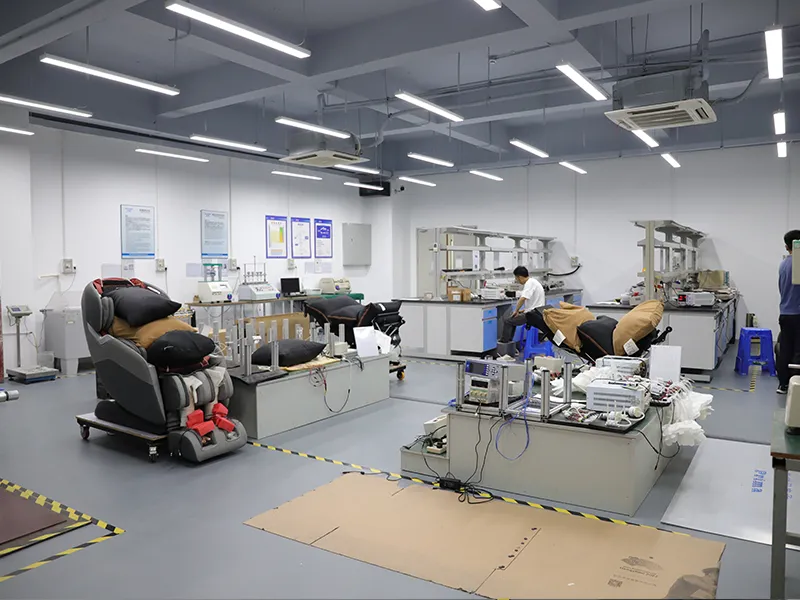
Compliance is configuration- and market-specific. A report for a similar chair, an adapter, or an earlier wireless module does not automatically cover the chair the buyer plans to sell. The target market and legal roles should be reviewed before design choices are frozen.
| Review area | Questions for the project | Timing |
|---|---|---|
| Electrical configuration | Do voltage, frequency, plug, cord, adapter, boards, motors, heaters, fuses, and labels match the intended market version? | Before quotation is finalized and again after configuration freeze. |
| Mechanical and furniture safety | How are stability, strength, moving parts, entrapment or pinch points, recline, footrest, and user load addressed? | During design review, prototype evaluation, and production verification. |
| EMC and radio | Does the chair contain Bluetooth, Wi-Fi, voice, wireless charging, or other RF functions, and do module, antenna, host, labels, and software match the plan? | Before selecting electronics; retest or technical review after relevant changes. |
| Materials and substances | What material, chemical, flammability, or restricted-substance requirements apply to the product and sales channel? | Before materials are ordered and before approving color or upholstery substitutions. |
| Labels and instructions | Who supplies the legal identity, warnings, rating information, traceability, language, and user instructions? | Draft during development; approve with the pre-production sample. |
| Reports and certificates | Do model, standard, applicant, factory, components, ratings, and product photos match the exact configuration? | Before mass-production release and before shipment document approval. |
| Production consistency | What critical parts and tests must stay the same so production remains consistent with the evaluated version? | At incoming inspection, assembly, change control, final test, and periodic review. |
For EU projects, official guidance explains that conformity assessment covers design and production and remains the manufacturer’s responsibility even when design or production is subcontracted. For U.S. projects, FCC guidance states that RF devices must be properly authorized before marketing or import; Bluetooth or other wireless changes therefore need configuration-specific review. UL also identifies electrical shock, fire, stability, strength, motors, actuators, and connectivity among relevant furniture-safety considerations. See the official EU conformity-assessment guidance, FCC equipment-authorization information, and UL furniture-safety overview.
Use our model-level Massage Chair Certifications guide and Certifications page as working resources, then have the responsible importer, brand owner, laboratory, or compliance professional confirm the current requirements for the exact product and market.
Massage Chair OEM Lead Time: Use a Critical Path, Not One Number
A statement such as 30–45 days can be meaningful only when the product scope, starting milestone, approvals, material status, testing, quantity, factory schedule, and shipment point are defined. Forrest therefore reviews lead time by project stage rather than presenting one number for every OEM inquiry.
Project lead time = requirements and feasibility + quotation and commercial approval + engineering and tooling + samples and buyer approval + compliance work + material preparation + production + inspection and shipment readiness
| Project scope | Typical critical-path work | Why the schedule cannot be assumed |
|---|---|---|
| Existing model plus branding | Artwork, labels, manual, packaging confirmation, material preparation, production, inspection. | Brand files, packaging supplier MOQ, language approval, production slot, and quantity still matter. |
| Minor customization | Feasibility, selected components or software, configuration sample, test review, materials, production. | A small visible change may depend on a long-lead component, firmware, or compliance review. |
| New tooling | Engineering, drawings, tool manufacture, trial parts, corrections, sample build, validation, production. | Tool corrections and part approval must finish before stable production can begin. |
| Substantially new product | Industrial and mechanical design, electronics and software, prototypes, tooling, verification, compliance, production readiness. | Several technical workstreams interact, and early prototypes are meant to find issues rather than prove the date. |
- How quickly the buyer supplies a complete brief, artwork, languages, legal information, and decisions
- Whether the requested functions are already compatible with the selected platform
- Tool design, manufacture, trial, correction, and acceptance when new parts are required
- Sample shipping time and the buyer’s internal review and approval time
- Testing-laboratory availability, failed findings, corrective changes, and retesting
- Raw-material and component availability, supplier MOQ, holidays, and production scheduling
- Order quantity, configuration mix, inspection plan, packaging readiness, and shipment booking
A useful quotation states the lead-time basis: the milestone that starts the clock, the work included, buyer-approval allowance, assumptions, exclusions, and what happens if the specification changes. It should also separate sample lead time, production lead time, and transport time.
Control Changes After Sample Approval
A late request is not only a communication issue. It can change the product that was priced, sampled, tested, purchased, and scheduled. Forrest reviews post-approval changes against the complete project baseline before they enter production.

| Requested change | Items that may need review | Required project record |
|---|---|---|
| Color or upholstery substitution | Material availability, color tolerance, sewing, cleaning, substances, appearance, MOQ, lead time. | Approved material and color revision, sample or waiver, cost and schedule effect. |
| Component substitution | Fit, rating, performance, reliability, software, safety, test report scope, spares. | Engineering approval, revised component record, test result, buyer approval where required. |
| Program or firmware change | Program sequence, buttons, language, error handling, sensors, load, interface version. | Software revision, release notes, full function retest, sample or video evidence. |
| Logo, label, or manual change | Artwork, legal identity, warnings, rating information, model name, cartons and inventory. | Approved artwork revision and disposition of superseded printed material. |
| Packaging change | Product restraint, foam, carton, dimensions, gross weight, loading, handling and transport risk. | Approved packed sample or drawing, packaging test decision, revised logistics data. |
| Quantity or model-mix change | Component purchases, production setup, MOQ, unit cost, inspection sampling, carton marks and schedule. | Revised order, price, material plan, production plan, and delivery commitment. |
The change should be accepted only after its effect on cost, MOQ, tooling, sample, compliance, production, QC, packaging, and lead time is visible. Verbal acceptance in a chat thread is not a complete change record.
Production Release: From Approved Sample to Factory Handoff
Sample approval is the handoff into production readiness, not permission to improvise. The approved configuration, materials, artwork, test criteria, and deviations should be converted into controlled production and inspection documents.
Incoming material → Assembly → Functional testing → Aging test → QC → Packaging → Final inspection → Shipment release
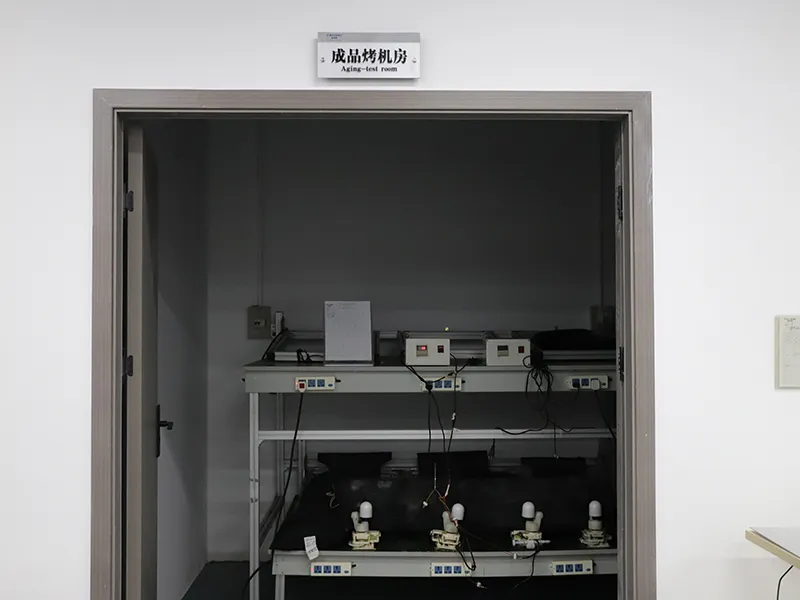
See the detailed factory sequence in How Massage Chairs Are Manufactured and use the Massage Chair Quality Control Checklist to define shipment checks for the order.
What an OEM Quotation Should Make Clear
A useful OEM quotation is a scope document, not only a unit-price line. It should allow both sides to identify the product, understand the assumptions, and see which costs or approvals sit outside the price.
| Quotation item | What should be stated |
|---|---|
| Baseline product | Model or platform, revision, dated configuration, included options, reference photos or drawings. |
| Unit price | Quantity tier, currency, delivery term and named place, validity, and the exact configuration priced. |
| MOQ | Finished-product MOQ plus any binding color, material, component, packaging, or variant MOQ. |
| Samples | Sample type, quantity, price, freight responsibility, build basis, and approval purpose. |
| Engineering | Included feasibility or engineering work and separately charged development tasks. |
| Tooling | Tool description, cost, payment, ownership, acceptance, maintenance, use, and project-end terms. |
| Testing and certification | Existing documents, project-specific tests, applicant or holder, model scope, cost, samples, and timing. |
| Brand and packaging | Logo method, artwork, labels, manuals, carton, foam, barcode, marks, pallet and included approvals. |
| Production lead time | Starting milestone, included stages, assumptions, approval allowance, production quantity, and shipment-readiness point. |
| Quality and inspection | Factory test coverage, inspection standard, buyer or third-party inspection, acceptance and corrective process. |
| Warranty and spares | Coverage for the intended use, exclusions, parts, labor or freight responsibility, service documents, and spare plan. |
| Exclusions and changes | Freight, duties, taxes, local work, unapproved requests, change-order method, and anything not included. |
For the complete cost structure and delivery-term questions, use our Massage Chair Wholesale Price, MOQ & Shipping Cost Guide.
Questions to Ask Before Starting an OEM Project
Use these questions before paying for tooling, approving a sample, or committing to a launch date:
- What is the MOQ for this exact model and configuration, and which component or supplier sets it?
- Which requested parts can be customized on this platform, and which cannot?
- Which changes require engineering, a physical sample, new tooling, or additional tests?
- Who owns each tool, who may use it, where is it stored, and what happens when the project ends?
- What compliance reports or certificates exist, and do they match the exact model, ratings, components, wireless functions, and applicant needed for the market?
- What sample stages are needed, what does each sample prove, and who approves it?
- When does the sample schedule start, and how are buyer review time and sample transport handled?
- When does production lead time start, what assumptions support it, and what event counts as shipment ready?
- Can packaging, labels, manuals, interface language, programs, and service documents be customized?
- What warranty applies to the declared market, channel, and intended use, and how are parts and technical support handled?
- What incoming, process, functional, aging, appearance, packaging, and final QC will be used for this order?
- How are specification, software, component, artwork, and packaging changes approved and recorded after sample sign-off?
How to Start a Massage Chair OEM Project with Forrest
Forrest supports distributors, importers, retailers, ecommerce brands, project buyers, and other B2B partners with massage chair model review, OEM/ODM discussion, product development, manufacturing, quality communication, packaging, and export preparation. The fastest first step is a complete project brief.
- Target market and channel: Sets product, compliance, label, packaging, warranty, and service context.
- Target model, reference product, or required product tier: Gives engineering and sales a concrete starting point.
- Must-have and optional functions: Prevents optional ideas from being priced as fixed requirements.
- Expected quantity and repeat-order plan: Connects customization with components, production setup, and purchasing.
- Brand, color, interface, manual, label, and packaging needs: Defines the visible and documentary scope.
- Voltage, plug, wireless functions, and required compliance evidence: Defines a market-specific electrical version.
- Destination, desired delivery term, and target launch window: Separates factory readiness from freight and launch timing.
After the initial review, we can identify the closest platform, list open feasibility items, separate standard and custom scope, and prepare a quotation based on the information available. Final MOQ, sample plan, tooling, compliance work, and lead time remain tied to the approved project configuration.
Related Forrest Resources
- View Massage Chairs
- OEM vs ODM Massage Chairs
- How Massage Chairs Are Manufactured
- Massage Chair Certifications
- Pre-Shipment Quality Control Checklist
- Wholesale Price, MOQ & Shipping Cost Guide
- Forrest Factory
- Discuss OEM/ODM Requirements
FAQ
What is the MOQ for an OEM massage chair?
There is no single MOQ for every OEM massage chair. It depends on the selected platform, order configuration, custom color or material, branding, packaging, electronics, tooling, component-supplier minimums, and production plan. Forrest confirms MOQ after the model and customization scope are clear.
Can I customize a massage chair in a small quantity?
Light private-label changes such as an approved logo method, manual, labels, carton marks, or selected existing colors may be easier to discuss at a smaller quantity than a new structure or custom electronic system. Feasibility and MOQ must be reviewed for the exact model and request.
Does every massage chair OEM project require tooling?
No. Existing-platform branding, artwork, available materials, and supported software changes may not need new product tooling. New shell, armrest, footrest, controller housing, structural, foam, or packaging parts may require molds, fixtures, dies, or other tools.
Who owns the tooling for a custom massage chair?
Tooling ownership is a commercial term, not an automatic assumption. The agreement should state who pays, who owns it, who may use it, where it is stored, how it is accepted and maintained, and what happens when the project ends.
How long does a massage chair OEM project take?
The schedule depends on whether the project uses an existing platform, the depth of customization, tooling, sample iterations, buyer approval time, testing and certification, component availability, quantity, production schedule, inspection, and shipment preparation. Ask for a stage-based critical path with a defined starting milestone instead of an unqualified number.
Can an existing massage chair platform use a different mechanism?
Sometimes a platform can support a defined mechanism option, but a mechanism change can affect frame interfaces, rail, mounting, electronics, software, load, noise, safety, shell space, and tests. Forrest must review the exact platform and mechanism rather than treating it as a simple accessory.
When should massage chair certification be confirmed?
Confirm the destination-market and channel requirements before finalizing the product specification. Review available evidence during feasibility, close test gaps before mass-production release, and recheck whether later component, electrical, wireless, label, or software changes affect the approved configuration.
Planning a Massage Chair OEM Project?
A successful massage chair OEM project is built on controlled decisions. Define the market and product, select the right platform, freeze the configuration, separate unit and development costs, approve samples, close compliance questions, control changes, and release production against written evidence.
Forrest will not reduce that process to one universal MOQ or a lead-time promise without a product scope. Share the project brief, and we can review what is standard, what is custom, what needs tooling or testing, and what information is still required for an accurate quotation.
View Massage Chairs · Discuss OEM/ODM Requirements · Request a Quote