
How to Choose a Massage Chair Manufacturer
Choosing a massage chair manufacturer goes beyond comparing unit prices; for B2B buyers, the right factory partner impacts product positioning, quality, certifications, and long-term growth. Massage chairs are significant investments, requiring careful evaluation of the supplier as a comprehensive manufacturing partner, not just a product catalog. This guide outlines key checks for serious B2B buyers before selecting a massage chair manufacturer for wholesale, private label, or OEM/ODM projects.
What Makes a Good Massage Chair Manufacturer?
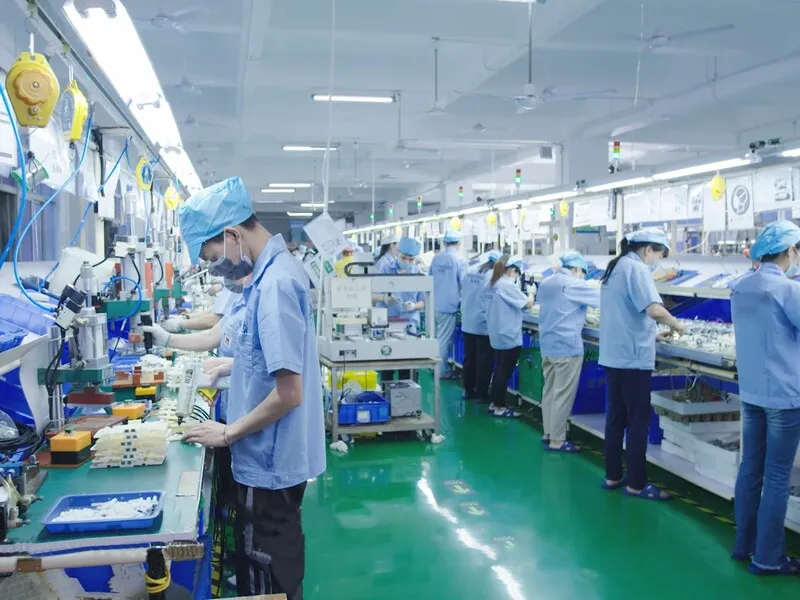
A good massage chair manufacturer provides stable production, clear product specifications, practical OEM/ODM support, pre-shipment quality inspection, relevant certification, export packaging coordination, and responsive after-sales communication, ultimately reducing sourcing risk for buyers.
1. Product Fit: Beyond Factory Size
While a large factory is beneficial, product fit with your market needs is paramount. Different markets require different massage chair types—from premium showroom models to compact online retail options. Clarify your target market’s specific needs before requesting quotations to ensure the manufacturer recommends suitable products based on price, channel, features, and shipping requirements.
2. Core Massage Chair Features
Buyers encounter extensive feature lists, but commercial value varies. A strong manufacturer clearly explains each feature’s benefit. Key features to compare include:
| Feature | Why It Matters for Buyers |
|---|---|
| 3D massage mechanism | Supports a premium product story and deeper kneading. |
| Zero gravity positioning | A popular comfort feature for full-body massage chairs. |
| SL track or flexible rail design | Defines the massage path coverage for back, waist, and hip. |
| Full body airbags | Provides a comprehensive, wrapped massage experience. |
| Foot rollers and leg massage | Essential for full-body comfort and product differentiation. |
| Heating function | Adds a popular comfort feature expected in wellness products. |
| Touchscreen or shortcut controls | Enhances perceived product quality and user convenience. |
| Bluetooth music or ambient lighting | Improves retail display value; secondary to core performance. |
| Optional functions (e.g., voice control) | Supports higher-end positioning if valued by the market. |
Forrest models like FR-700D and FR-700, for instance, are designed with clear feature combinations that are easy for distributors and retailers to communicate.
3. Practical OEM/ODM Support
Many factories claim OEM/ODM support; buyers must understand what is realistically offered. Useful OEM/ODM services include logo customization, color options, packaging artwork, carton marks, function configuration, material choices, private label documentation, and new model discussions based on project quantities. A reliable supplier explains realistic options rather than making vague promises.
4. Prioritize Quality Control
Massage chair quality issues are costly due to product size and repair complexity. Therefore, quality control should be assessed early. Inquire about:
- Raw material and component inspection
- Motor and electronic component verification
- Assembly process control and function testing
- Aging or repeated-use testing
- Packaging and final shipment inspection
- Spare parts handling
The goal is to ascertain a repeatable quality process before products leave the warehouse. Forrest’s Quality Control page provides detailed insights into testing and inspection stages.
5. Certifications and Market Requirements
Certification needs vary by destination market, sales channel, and electrical structure. Manufacturers should clearly discuss certificate availability. Common questions include:
- Which product certificates (e.g., CE, CB, ETL, RoHS) are available?
- Can copies of certificates and test reports be provided?
- Are certificates tied to specific models or product families?
- Does the factory support compliance discussions for different markets?
- Are packaging labels and manuals aligned with destination requirements?
Forrest’s Certifications page lists key compliance references, but buyers should always confirm exact requirements for their specific product model and market.
6. Understand Real Wholesale Cost
The lowest unit price rarely equates to the lowest overall business cost. For massage chair wholesale, buyers must calculate the full landed cost and operational risk, considering:
- Unit price, sample cost, customization cost
- Packaging cost and spare parts policy
- Carton size and container loading quantity
- Freight, import duties, and local taxes
- Warranty handling, local service, and product replacement risk
Large packaging dimensions mean container loading efficiency significantly impacts overall cost.
7. Clear Specifications
Professional buyers require precise specifications for comparison, internal approval, ecommerce listings, training, and logistics. Essential fields include:
- Model number, product type, voltage, and power
- Massage areas, main functions, product size, and package size
- Net weight, gross weight, carton quantity
- 20GP and 40HQ loading quantity
- Warranty terms and OEM/ODM availability
Consistent specification information is crucial for efficient quotation, listing, and shipment preparation.
8. Evaluate Factory Communication
Effective supplier communication is integral to product quality. Look for a manufacturer whose sales team:
- Asks about your target market and sales channel.
- Explains product differences clearly.
- Provides clear and consistent specifications and quotations.
- Details payment, lead time, packaging, and shipment responsibilities upfront.
- Discusses sample, bulk order, and customization steps comprehensively.
- Responds to technical questions transparently.
Strong communication prevents costly misunderstandings.
9. Confirm Shipping and Packaging Support
Massage chairs require meticulous packaging and export coordination. Buyers should confirm:
- Carton structure and internal product protection.
- Carton mark and pallet/loading requirements.
- Export document support.
- Buyer forwarder pickup process and freight options.
- Shipment schedule post-final inspection.
For bulk orders, sea freight is typically the most practical option.
10. Review Warranty and After-Sales Handling
After-sales support is critical for complex products like massage chairs. Before ordering, inquire about:
- Warranty period and coverage.
- Information required for reporting issues (e.g., photos/videos).
- Spare parts availability.
- Handling of quality issues within and after the warranty period.
- Troubleshooting support.
A clear, realistic support process is more valuable than an extended, vague warranty promise.
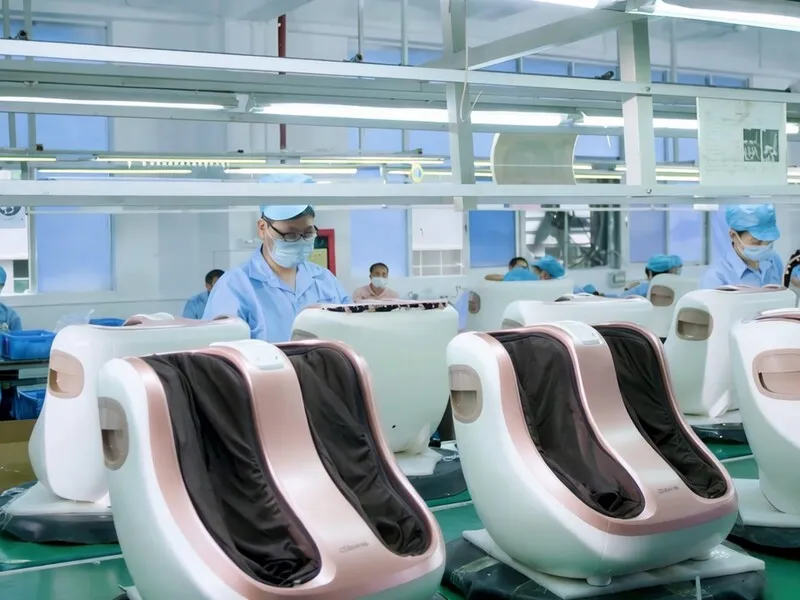
Manufacturer Evaluation Checklist
Before selecting a massage chair manufacturer, review the following key areas:
| Evaluation Area | What to Verify |
|---|---|
| Product Fit | Are the available models suitable for your target market, price range, and sales channel? |
| Factory Capability | Can the manufacturer demonstrate real production, testing, warehouse, and showroom facilities? |
| Product Specifications | Are all technical specifications, dimensions, weights, and loading details clearly documented? |
| Quality Control | Is there a defined inspection and testing process before shipment? |
| Certifications | Are relevant certificates and compliance reports available for review? |
| OEM/ODM Support | What level of customization is available for your expected order volume? |
| Packaging | Can the supplier support custom carton marks, labels, and packaging requirements? |
| Shipping Support | Can they coordinate with your forwarder or assist with export logistics? |
| Payment Terms | Are deposit requirements, payment schedules, and quotation terms clearly defined? |
| Warranty & Service | Is the after-sales process documented and practical to implement? |
| Communication | Does the team respond professionally and provide clear answers to technical questions? |
Common Mistakes to Avoid
Mistake 1: Choosing Only by Price
Prioritizing only the lowest unit price can lead to higher long-term costs due to quality issues, shipping complications, or insufficient after-sales support.
Mistake 2: Ignoring Product Positioning
Match the massage chair to its intended channel. A premium showroom model differs significantly from a product for entry-level promotions.
Mistake 3: Accepting Vague OEM Promises
Always clarify the actual scope of customization, minimum order quantities (MOQs), artwork requirements, and lead time implications.
Mistake 4: Skipping Sample Evaluation
For new suppliers or models, samples are essential to verify appearance, massage feel, control logic, packaging, and overall user experience before bulk orders.
Mistake 5: Forgetting Loading and Packaging Details
Large massage chair cartons directly affect freight costs, warehouse planning, and local delivery efficiency.
Why Forrest Fits B2B Massage Chair Projects
Forrest supports global distributors, importers, retailers, and OEM/ODM partners with a range of massage and wellness equipment, including full-body massage chairs, cushions, foot massagers, neck and shoulder massagers, and massage guns.
For massage chair buyers, Forrest offers:
- Factory-direct product supply and model comparison.
- OEM/ODM discussion and product specifications for wholesale planning.
- Quality control and testing coordination.
- Packaging and export support.
- Inquiry-based quotation support.
Buyers can initiate contact by reviewing the Massage Chair category and providing their target market, product type, estimated quantity, customization needs, and required certificates.
Final Advice
The ideal massage chair manufacturer simplifies your purchasing decision. Seek a supplier who understands product positioning, provides honest specifications, supports quality checks, manages export details, and communicates effectively throughout the order process. Such a manufacturer becomes a long-term partner in building a reliable wellness product line.
If you are sourcing massage chairs for wholesale, retail, or OEM/ODM projects, send Forrest your target market, preferred product level, estimated order quantity, and customization requirements. The team can recommend suitable models and prepare quotation details for your project.